
Locations of events.
We have located the articles on curated books of the MoneyMuseum for you.


0
Articles to your selection:
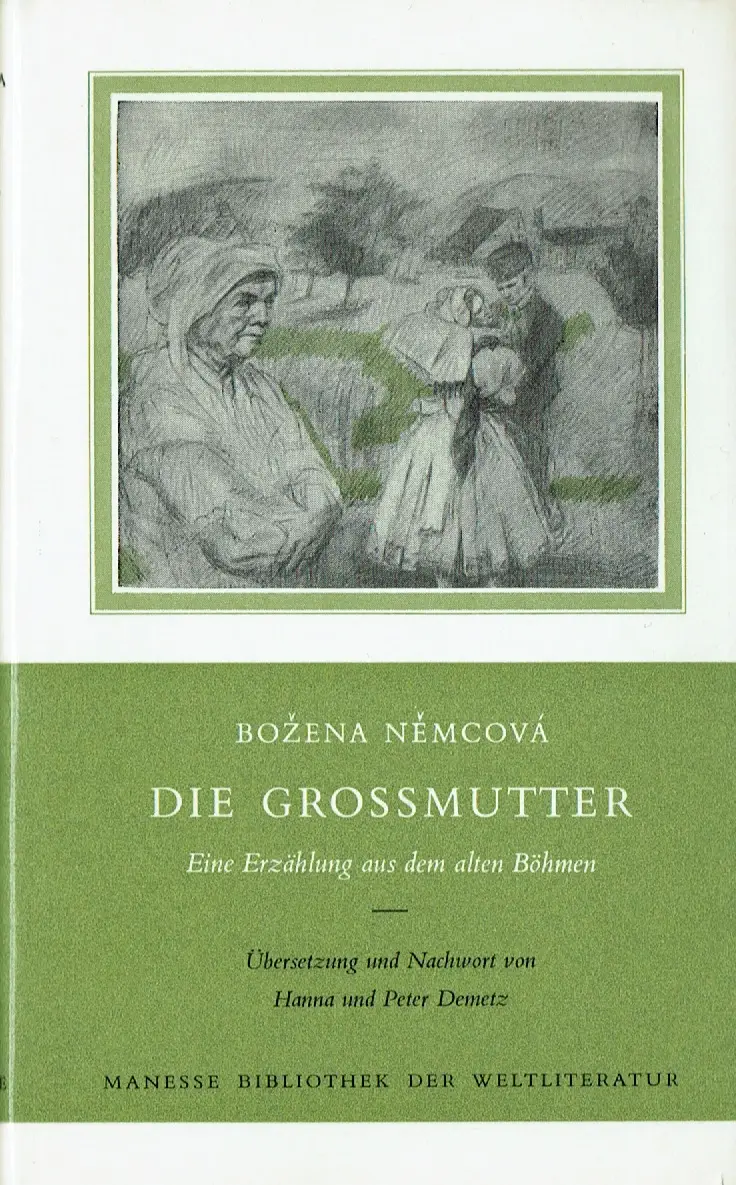
Babička
Babička: Or Can Old People Make a Difference?
She holds up the line at the supermarket checkout. Fumbling awkwardly in her purse for small change. What do you think when you have to wait behind this shabbily dressed old woman? That elderly people are a burden on our society? Czech author Božena Němcová saw it differently: in Babička — meaning 'Grandmother' in English — she describes how an old woman positively influences the lives of those around her.
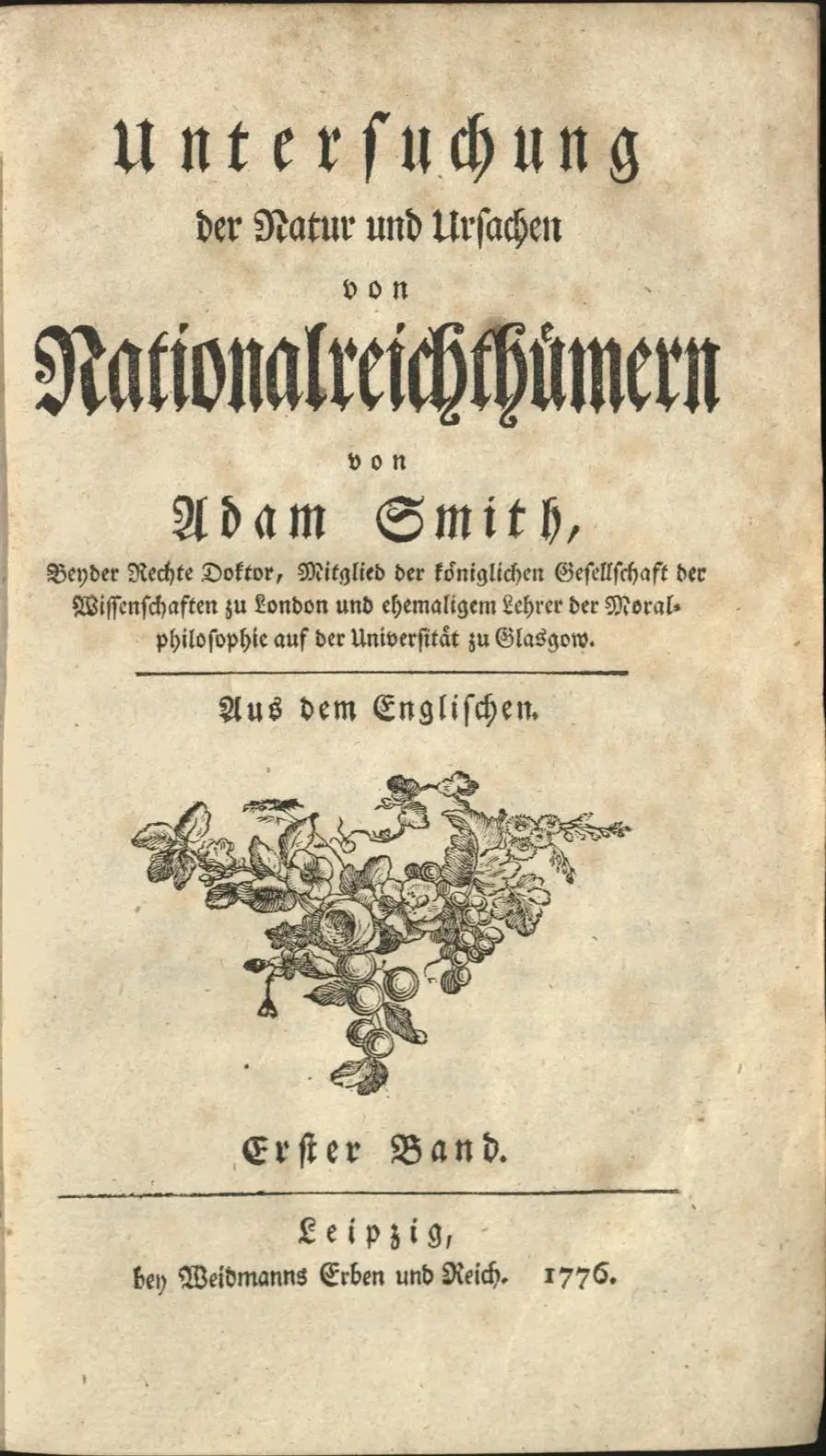
Untersuchung der Natur und Ursachen von Nationalreichthümern
What Makes Nations Wealthy
Adam Smith is one of the central figures of economic history. His 'invisible hand' is still cited today as a central maxim of economic liberalism. However, his view of things was also time-bound. The beginning of industrialisation and the rise of the bourgeoisie gave his theses their impact.
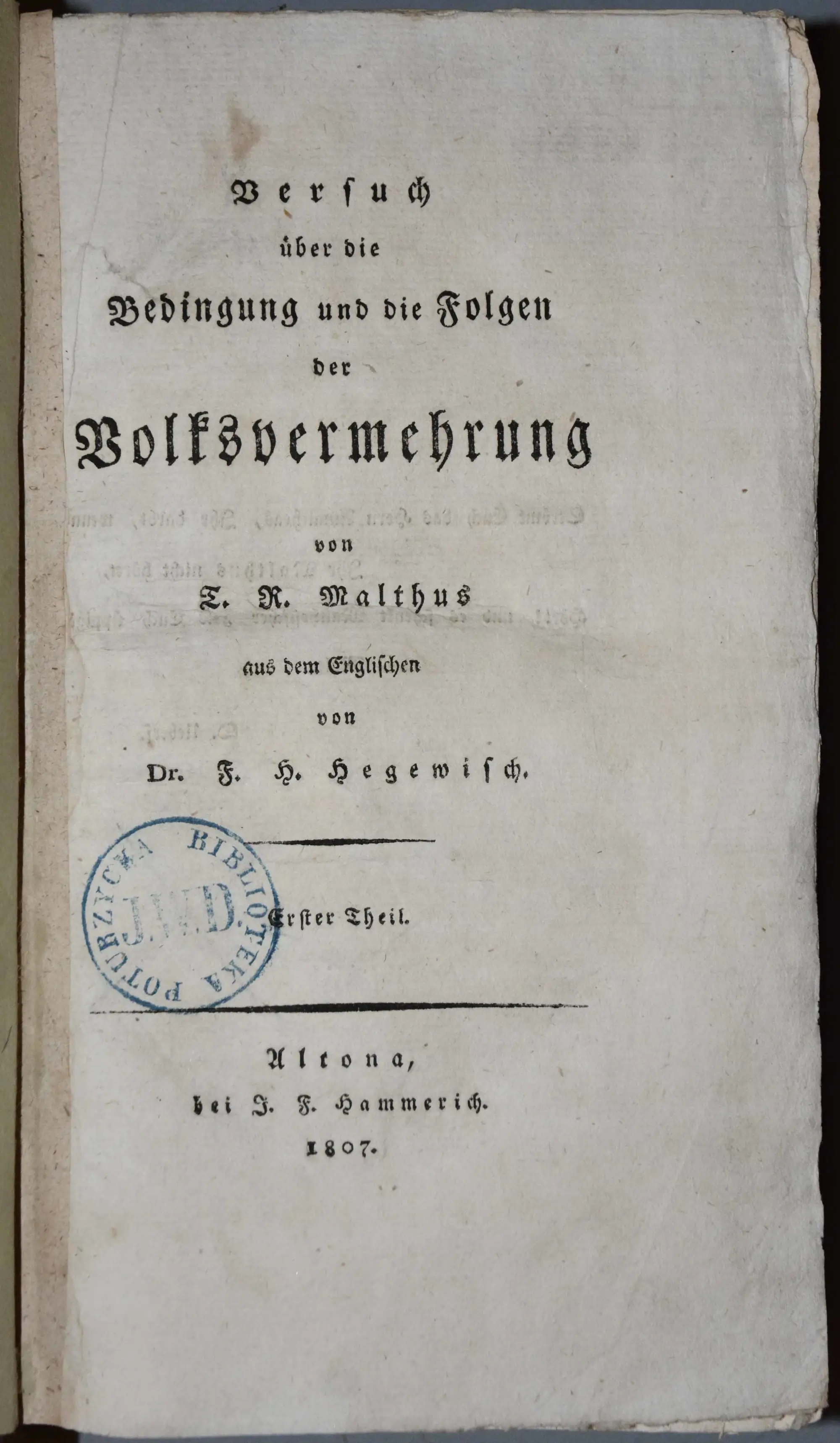
Versuch über die Bedingungen und die Folgen der Volksvermehrung
Malthus: How a Rich Man Can Sleep Soundly in the Face of Poverty
Why does poverty exist, and how can we eliminate it? Around 1800 this question occupied all English people who saw the misery in the slums of industrial cities. The young Malthus found his own answer. He wrote that the rich could not eliminate poverty. For the reason for poverty was the poor person himself.
Zeit zu töten
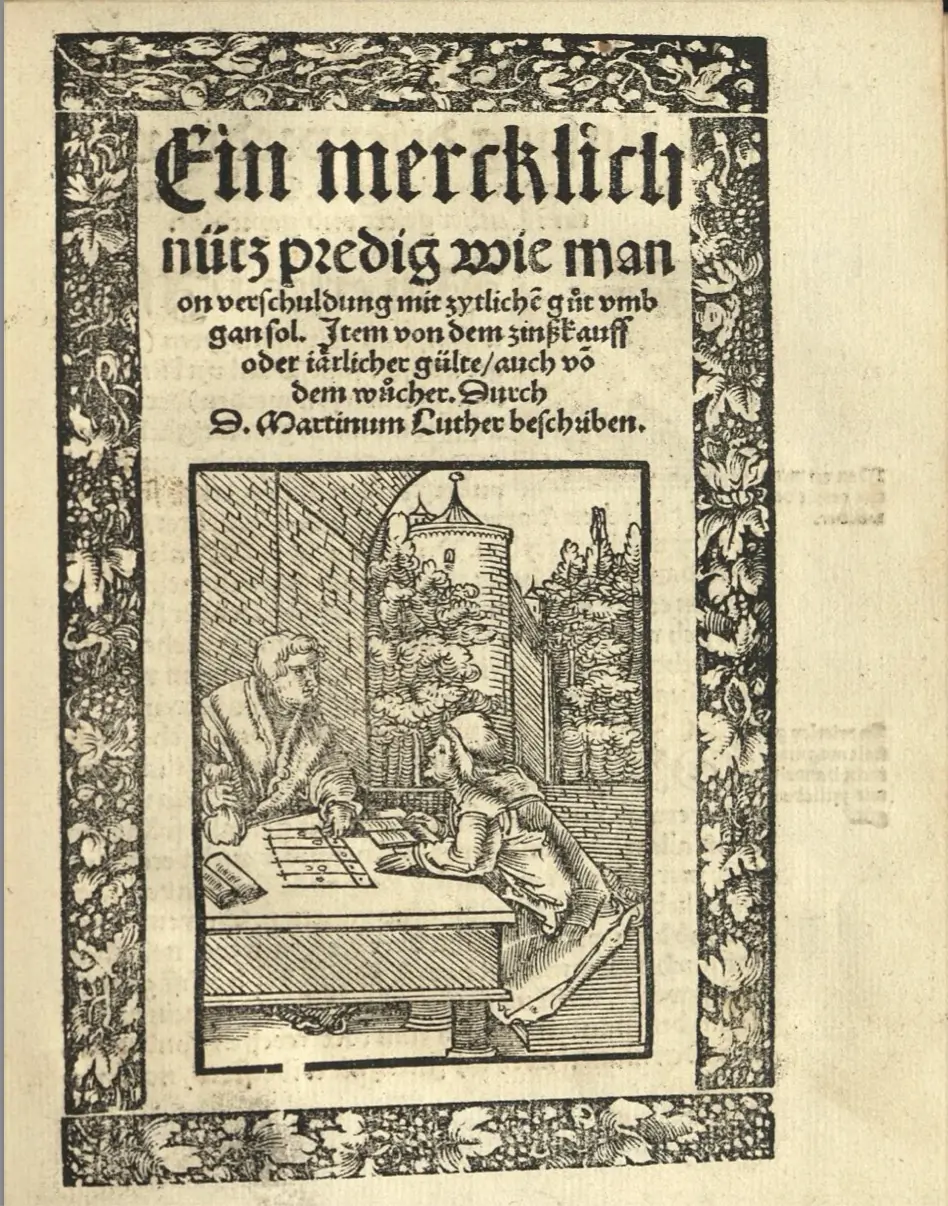
Ein mercklich nütz predig wie man on verschuldung mit zytliche gut umb gan sol. Item von dem zinßkauff oder iärlicher gülte, auch vo dem wucher. (Auch bekannt als Großer Sermon von dem Wucher.)
Luther and the Question of Interest
Martin Luther lived in an era of transition. Traditional economic models were disappearing. The new monetary and fiscal policy was robbing many people of their livelihoods. The Augustinian monk Martin Luther formulated his views in the face of these developments. Some of them were neither progressive nor backward-looking, but simply unworldly.
