

When Adam Smith was born in 1723 in the Scottish town of Kirkcaldy, Great Britain was a country that had developed quite differently from the monarchies of the continent. After all, British politicians at that point had already twice brought in a foreign monarch who had contractually assured them -- in exchange for the power to rule -- that he would respect all the privileges and customs of the British upper class. Thus a compromise between king and parliament had arisen that left the most important decisions not in the hands of the monarch but in those of the politicians. And these were recruited only in part from the old hereditary nobility. In the House of Commons sat successful entrepreneurs. For of course at that time there was no universal suffrage in Great Britain either. The possibility of determining one's representative was tied to property, so that the circle of voters remained relatively small and predictable. But into this circle any free Englishman, Scot, Irishman, or Welshman could rise if he had acquired a fortune through diligence, daring, ideas, and entrepreneurial spirit.
This composition of the state's decision-makers brought with it a quite different understanding of what a nation actually was. While in France a ruler could claim to be identical with the state, the British upper class understood its nation as an association of those who carried it forward, led by those who had actually advanced that nation. Thus the pursuit of profit could become the decisive yardstick of British policy. It was the philosopher Adam Smith who formulated the moral justification for this new 'way of life.'
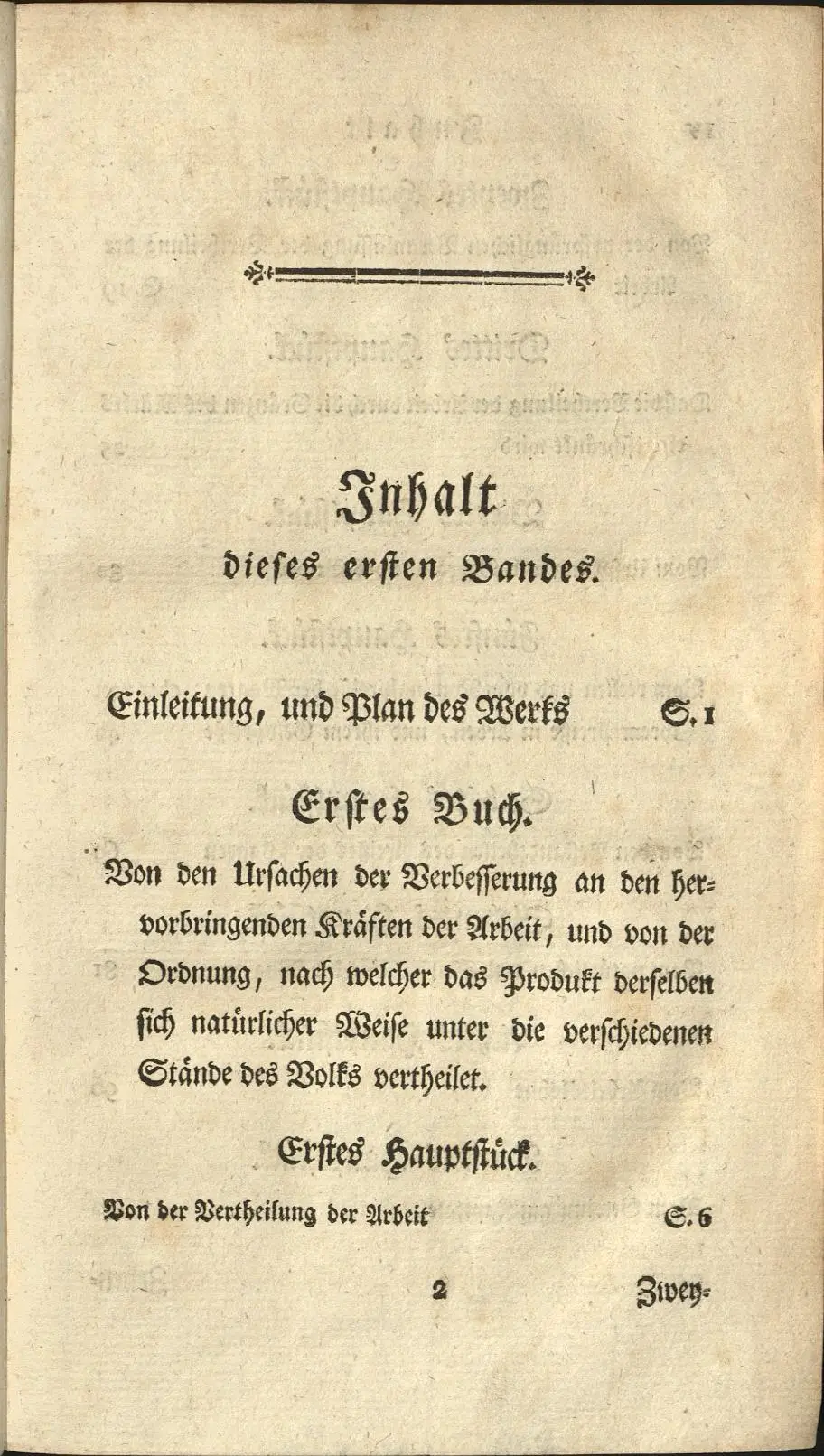
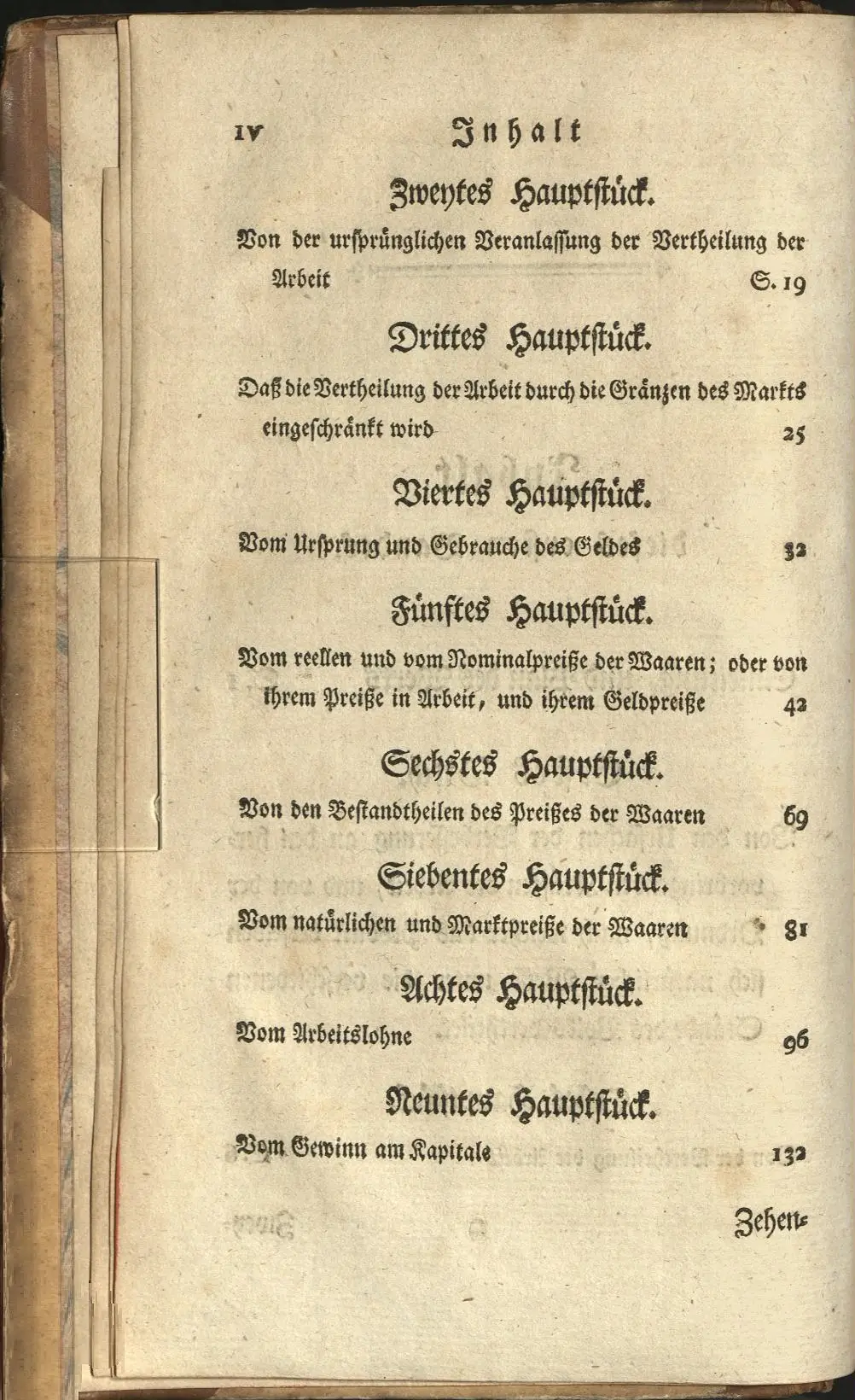
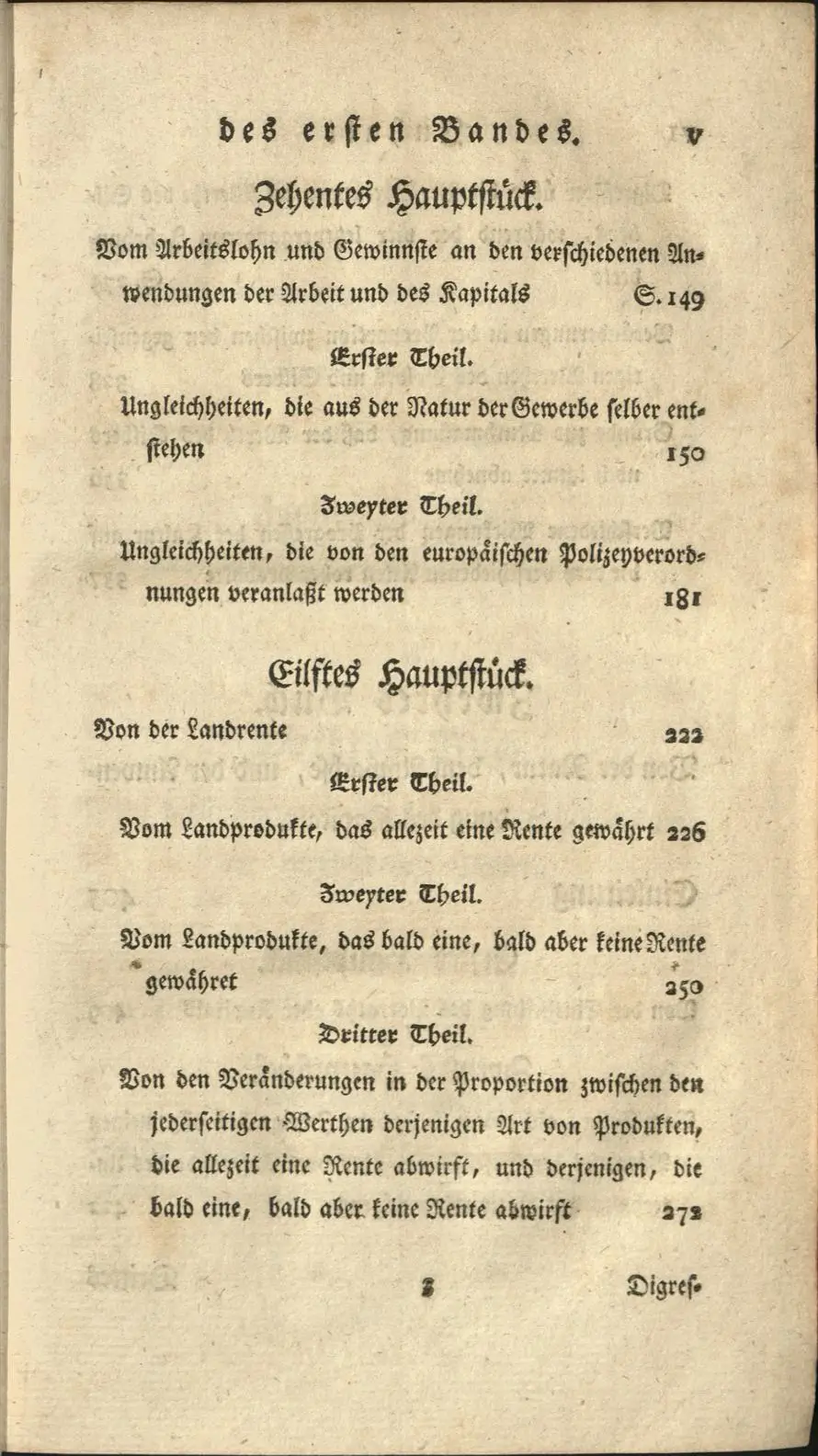
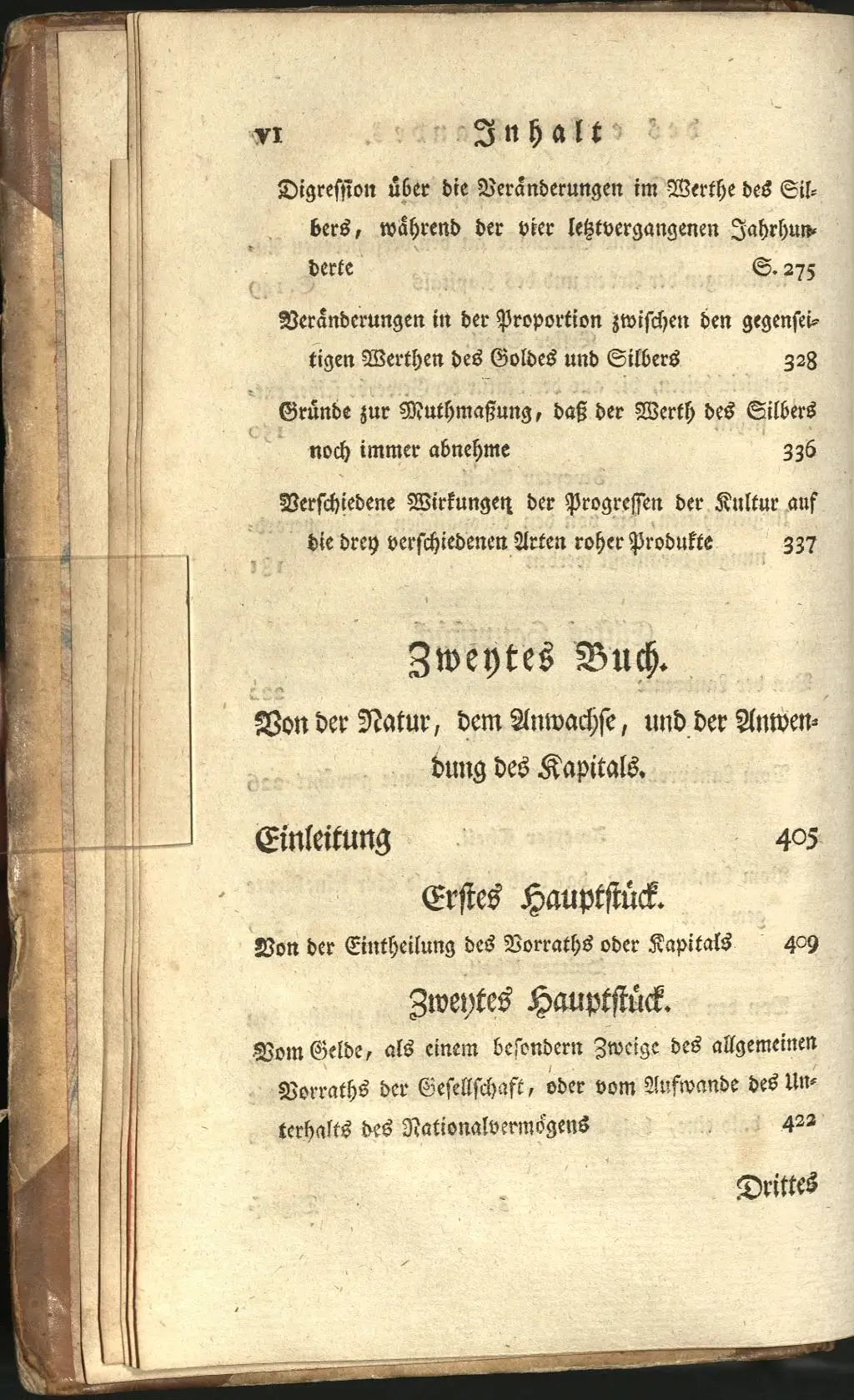
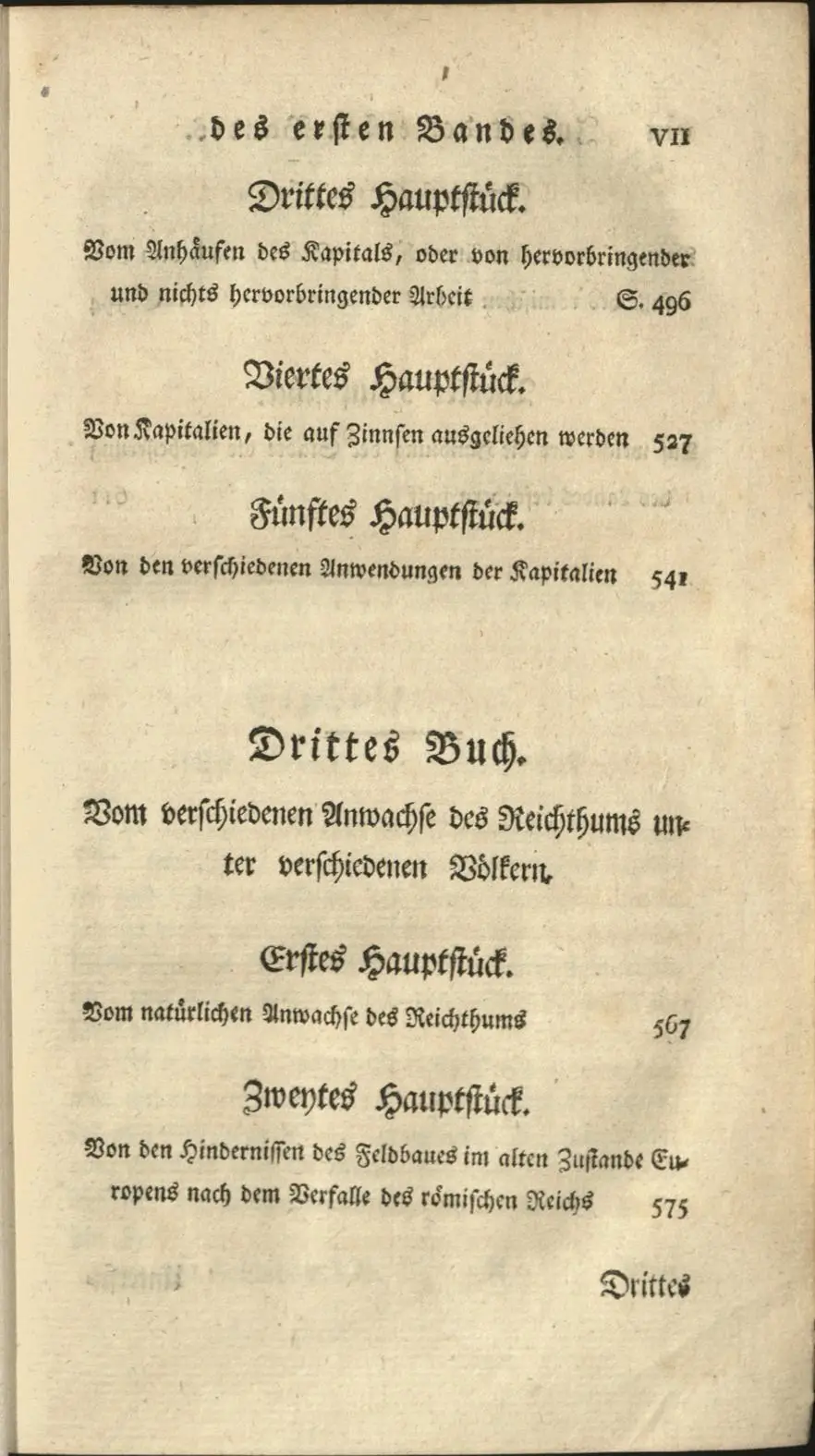
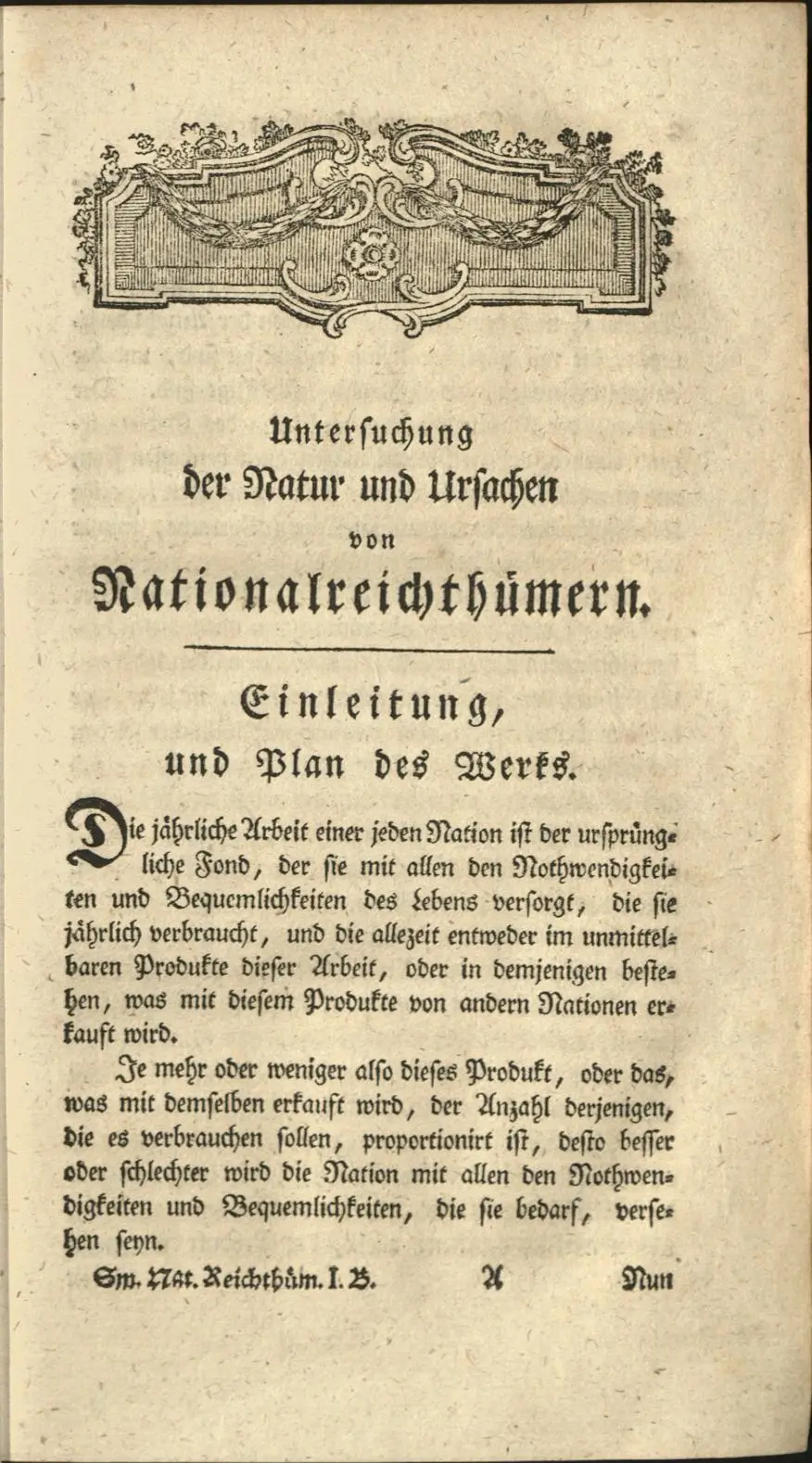
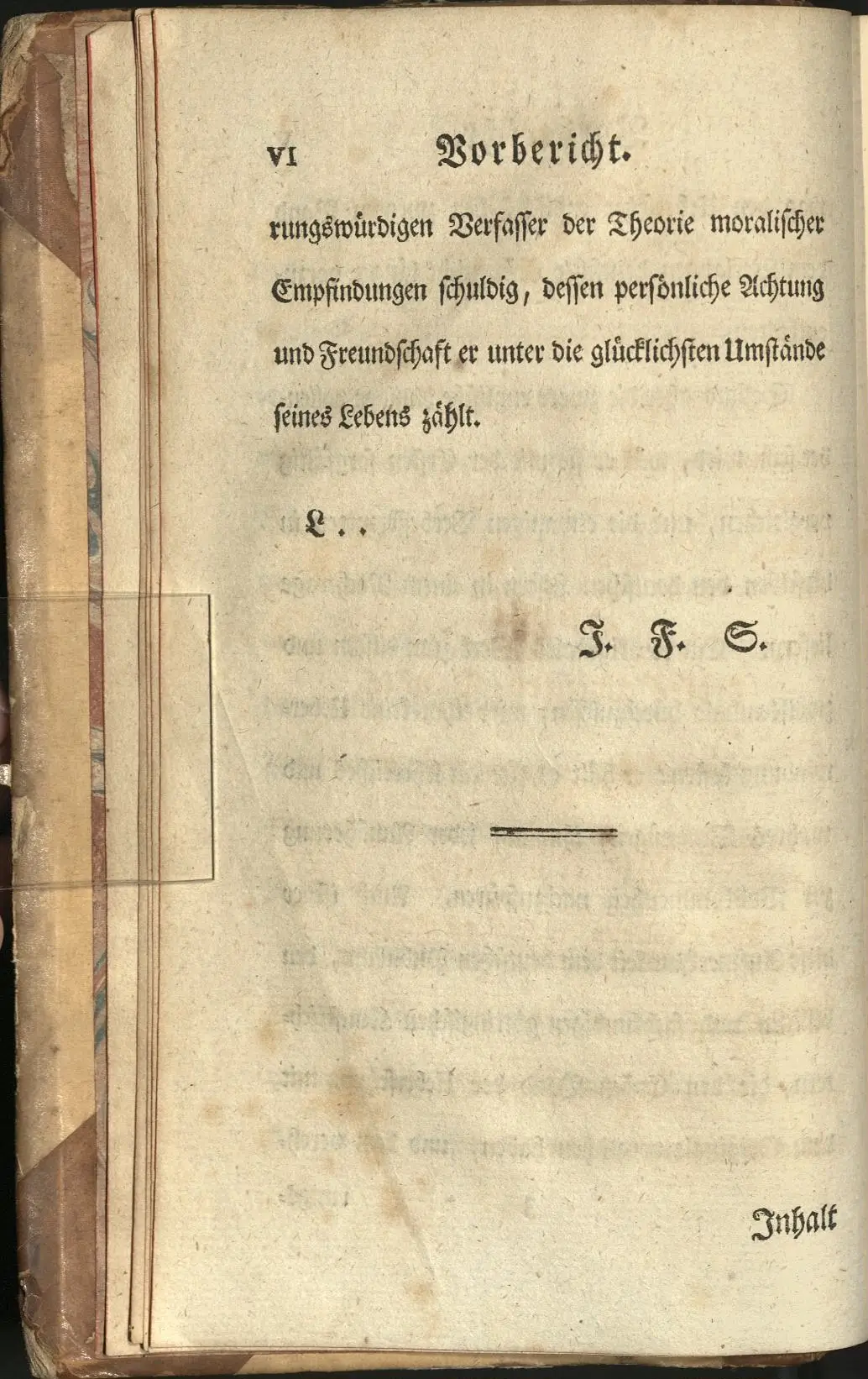
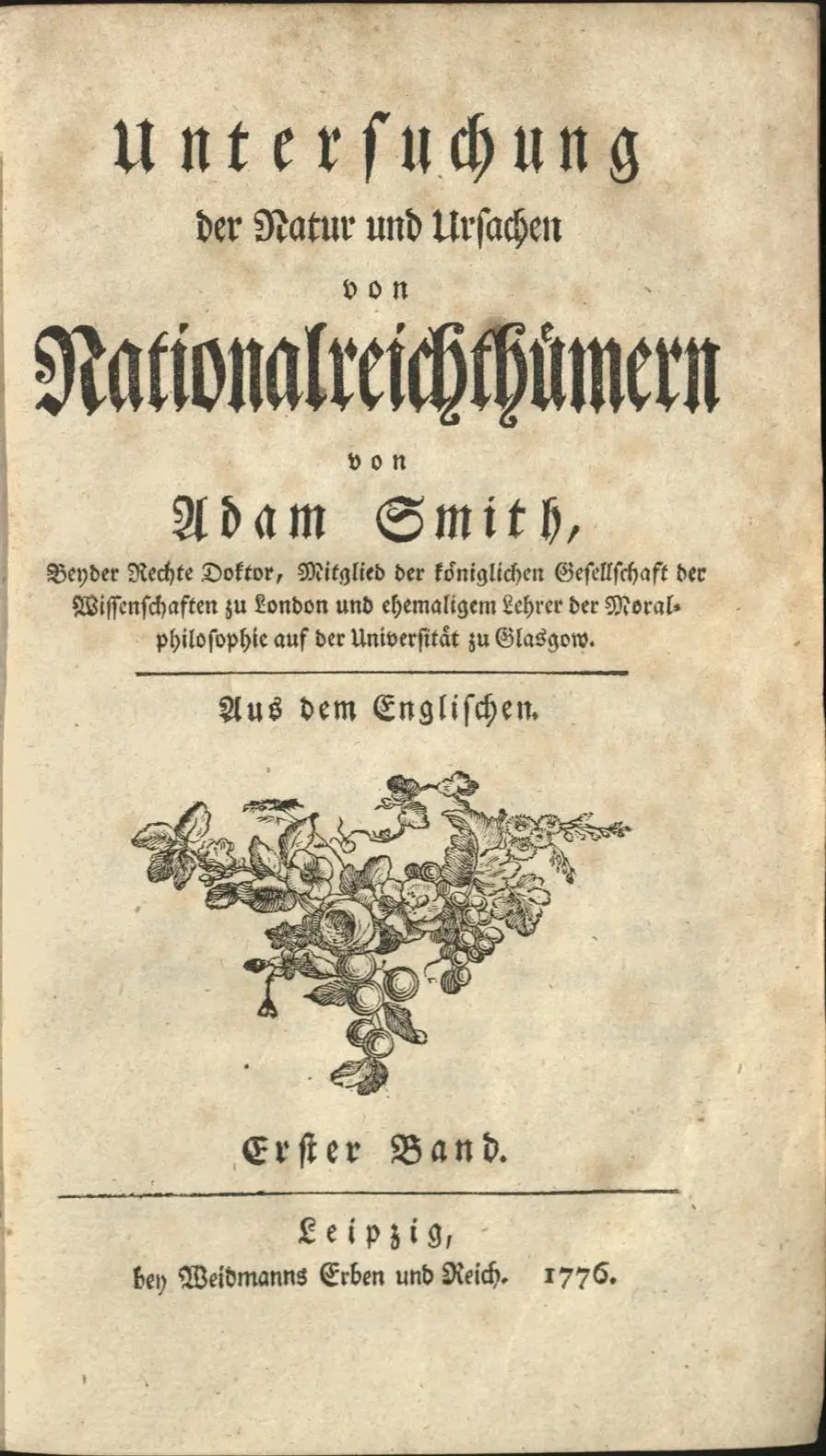
His work published on 9 March 1776, 'An Inquiry into the Nature and Causes of the Wealth of Nations,' is regarded by us as the beginning of economic science. We celebrate Adam Smith as the first classical political economist and founder of economic liberalism. He was so often quoted that after Karl Marx he became the most frequently mentioned economist of the era before 1950; but perhaps through the incredible resonance his work found, we have somewhat overestimated its influence. Perhaps it was not the case that Adam Smith's theories changed the world; perhaps his theories were only received so frequently because the world had changed.

Artikeltext:
A Moral Philosopher Named Adam Smith
But back to Adam Smith. He came from a good but not a wealthy household, so he had quite a need to earn his living. He therefore attended the university in Glasgow and Oxford, to acquire the knowledge regarded as indispensable for a leading position in administration or private business. It was a moderate catastrophe for him that in 1746, after his return to his home country of Scotland, he found no employment. Thanks to his family's connections he was at least given the chance to deliver public lectures in Edinburgh. The goal was to fascinate his audience with these lectures to such an extent that a professorship would practically have to be offered to him. Fortunately Smith was an excellent speaker and had a feeling for the questions of the time. Thus the University of Glasgow appointed him Professor of Logic in 1751, and Professor of Moral Philosophy in 1752 -- a subject understood at that time as one in which one could reflect on all questions of life, from theology, to the proper conduct of the individual, to economic contexts.
Adam Smith was a pedagogically gifted and therefore extremely popular professor. This procured him the chance of his life: the Scottish politician Charles Townshend offered him the position of tutor to accompany his ward Henry Scott -- the 3rd Duke of Buccleuch, 5th Duke of Queensberry, and one of the wealthiest landowners in England, then just 18 years old -- on his Grand Tour. For this he was to receive an annual pension of 300 pounds after his return, a sum on which a family could live comfortably. Smith agreed and travelled in the retinue of the Scottish nobleman.
He may have hoped for intellectual stimulation from this. But in 1764 the travelling party stayed a whole year in Toulouse. At that time Adam Smith still spoke only broken French, so that he had barely any contact with the educated salons. He was bored and devoted his superfluous time to a long-cherished idea: to summarise all the theories of modern economics then in circulation in one book.

His material was thus initially already-published treatises. Once he had learned French, what he heard in conversations with the most significant thinkers of the country was added. For the tutor of a Scottish nobleman had all doors open to him. He moved in the circles of philosophers like Voltaire, Diderot, and d'Alembert, and politicians like Benjamin Franklin. More important for his work, however, were probably the conversations with Anne Robert Jacques Turgot. He was at that time the most innovative economist in France and was appointed Finance Minister of Louis XVI in 1774. Even today one occasionally reads that he could have prevented the French Revolution had he not been dismissed as early as 1776. His successor in office was the Genevan banker Jacques Necker, also a preferred conversation partner of Adam Smith. And finally mention should be made of Francois Quesnay, who certainly also discussed his great theory of surplus value with Adam Smith.
All of them were at that time fighting against mercantilism -- or as it was called in Germany, cameralism -- whose sole aim was to increase the state coffers. Absolute monarchs like Louis XIV of France had understood that their economic policy could provide them with the necessary income to finance their power politics. A cornerstone of mercantilist thinking was to increase a nation's exports in order to prevent imports. And this brought numerous disadvantages for the private citizen. Thus the products manufactured in a country were made practically unsaleable in neighbouring countries by the high tariffs levied there. Domestic markets were frequently too small to make mass production profitable. And this meant unnecessarily high prices for the private consumer to finance his state's power politics.
It was precisely against this that Adam Smith's work was directed. It was a rejection of the state coffers, a defence of private profit-seeking, and exactly what every educated person at that time thought. Adam Smith summarised the current theses, systematised them, and thereby provided politicians with a bible of economics that they could cite to give scientific grounding to one of their proposals. That is why Smith's work sold so frequently -- and that despite the then enormous price of one pound 16 shillings!
The first edition was completely sold out within six months. The publisher had to reprint -- no fewer than five times before the death of Adam Smith. A total of 5,000 copies of his work were sold at his death. In addition the two volumes appeared in German in 1776 and 1778, in French in 1778 and 1779, in Danish in 1779 and 1780. Translations into Dutch, Italian, Spanish, and Russian followed. In other words, Adam Smith's theses soon became common economic currency throughout Europe.
But what were his theses? We will now look at these more closely.
The Principle of Mass Production
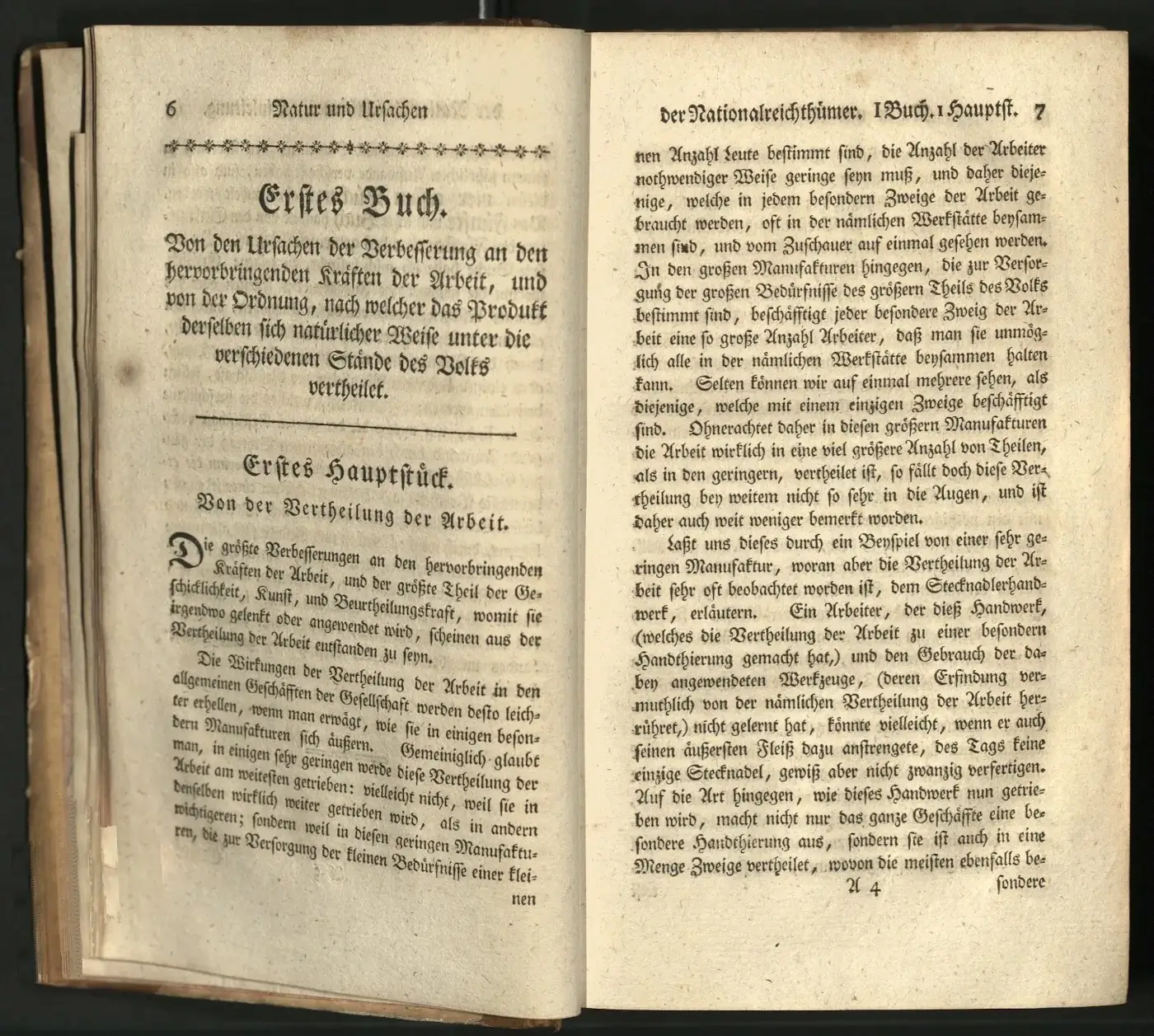
Adam Smith begins his work with the chapter 'Of the Causes of Improvement in the productive Powers of Labour.' In it he deals with what was then a highly modern phenomenon, namely mass production. As an example he uses information from the French Encyclopedie on the manufacture of sewing needles. He sets out that a single, untrained person can at most produce a few needles in a day, while a specialised manufactory with ten workers produces 48,000 needles a day, that is, 4,800 needles per person. Through the division of labour every citizen of a country can buy sewing needles considerably more cheaply than if he had to produce them himself -- a decisive advantage for the buyer. But the producer gains as well, for he earns from the manufactory and can thus acquire capital that he will put into new ventures. But more on that later.
The Human Being as a Trader
Adam Smith postulates that the economy is based on a primordially human property: the human drive to engage in trade. For this purpose the human being has even invented its own medium: money. It facilitates the exchange of trade, provided the government does not -- as is to be avoided as far as possible -- use it for its own manipulations in favour of the state coffers. To be sure, the currency manipulations of a John Law lay several decades in the past, but his paper money was still being cited in France as a deterrent example. Smith sees the human being as profit-oriented. The scope of his trade is restricted solely by the size of his market. Therefore the regions with the best transport routes are the most developed and have already introduced the division of labour. Remote areas, by contrast, are still producing according to outdated methods and are thus falling ever further behind economically.
Today we immediately see where the problem with Adam Smith lies: he interprets the values of the class then ruling in Great Britain as a fundamental characteristic of the human being. Our world has changed and has rediscovered the ideals of autarky and self-sufficiency. Smith's postulate of the human need for profit optimisation has led us to the limits of growth.
Wages as the Basis of Calculation
Of course not all inhabitants of Great Britain in Adam Smith's time were entrepreneurs. How was he to integrate the middle and propertyless lower class into his system? Smith turns their labour power into a commodity that every person brings into the great barter trade: the worker exchanges this labour power for money and is thus just as subject to competition as all producers. The free market -- supply and demand -- determines his wage.
Smith distinguishes fundamentally between two social classes: those who can buy labour power and those who must bring their labour power to market. These two classes have opposing interests. The worker wants as high a wage as possible for his work. But the producer's profit depends on production costs being as low as possible: the lower the wage, the lower the production costs and the higher the profit. Now however the level of the profit determines where the free capital flows. High profits induce many capitalists -- at that time anything but a term of abuse -- to invest their money in a particular region. This leads to low interest rates, which in turn induce more entrepreneurs to make large investments there.
That is why it is so crucial for Smith that a government does not interfere in wage negotiations. Intervention in favour of workers could hinder the inflow of capital. Even worse are monopolies and privileged trading companies, because the associated price agreements restrict the free market and profit. At least equally damaging are agreements among workers. And the government must therefore most strictly prevent these. Here Manchester capitalism makes its greeting.
Natural Price, Market Price, and Return: A Regulatory Circuit
But if nobody interferes, the market will in a wondrous way regulate everything itself. This is what Adam Smith explains in the second chapter of his book, titled 'Of the Nature, Accumulation, and Employment of Stock.'
Let us first define what capital means for Smith. He describes it as that part of a fortune that goes beyond what a man must deploy for the maintenance of his family and his own labour power. This part he can use to procure an additional income through clever investment. To do so he makes the 'surplus' money available to an entrepreneur who uses it to make investments that generate a regular profit.
The return on the invested capital is thus part of what Adam Smith describes as the 'natural' price of a product. To raw materials, manufacturing costs, and labour costs is added the return on the capital invested in an enterprise.
Now however the 'natural' price is opposed by the market price, that is, the price that a product achieves on the market. And here the regulatory circuit of the free market comes into play: if the market price of a certain product is far above the 'natural' price, high profits arise. They attract many entrepreneurs to this branch of industry. They receive cheap credit from investors expecting high profits. Thus producers multiply and with them supply, while demand remains constant. The consequence: the market price falls.
Conversely, when a market price is at or only just above the 'natural' price, producers and investors withdraw from a branch of industry. Supply declines while demand remains constant. The consequence: the market price rises.
Thus the market constantly balances itself to optimally satisfy demand.
The Error in the Regulatory Circuit
What Adam Smith did not yet know was the effect achieved by advertising. He could not imagine that people already possess everything they need and must therefore be induced by advertising to buy beyond their own needs. In a world in which the self-image of entire consumer generations depends on the possession of a brand product, Adam Smith's regulatory circuit does not function. How could it? It was designed for a society in which many people could not even satisfy their basic needs.
How to Promote General Prosperity
In his time there were still many impoverished and backward regions, especially in Scotland. England with its factories and trading centres, by contrast, seemed to Smith advanced. He explains this difference with the dominance of agriculture in Scotland, which in his view is not suited to production based on the division of labour. But Smith identifies further reasons that impede economic growth. He explains them in his third chapter, titled 'Of the different Progress of Opulence in different Nations.'
For him the removal of borders is the secret of prosperity. To support his thesis he draws on history. Citizens fared much better under the Romans than in the early Middle Ages, because during the Roman Empire the exchange of goods between city and countryside had functioned. The egoistic exclusiveness of individual farmsteads in the early Middle Ages, by contrast, had led to a decline in prosperity.
This argument is a side-thrust at the demands of mercantilist theorists. With the historical example, Smith attempts to reduce to absurdity the high tariff barriers that mercantilist economists at that time considered without alternative.
What a State Can Do to Promote Prosperity
That is why Adam Smith in his chapter 'Of Systems of Political Economy' argues for free trade. He demands not only the abolition of border tariffs but regards any interference by a state as harmful. This is his decisive paradigm shift. In it is rooted our conception of the 'invisible hand' of the market, whose mechanisms work together for the best of all.
Smith himself actually used this term in an entirely different context. The quotation reads in the original context: 'He is in this, as in many other cases, led by an invisible hand to promote an end which was no part of his intention.' With this Smith is referring to the entrepreneur whose self-interest coincides with the general good.
Since self-interest and public welfare coincide anyway, Smith regards any state intervention as not only unnecessary but harmful. Inefficiency and the associated higher prices are in his view the consequence of state interventions. A state should rather concentrate on guaranteeing peace and legal security. And through an efficient education system it should ensure that sufficient well-educated workers are available to industry. Exports can be promoted, but only through tax relief and premiums. This stimulates one's own goods production and prevents capital outflow abroad. Here the paradigm shift effected by Smith becomes evident once again: while the mercantilist state pursued an economic policy that procured for it the means to increase its influence and territory, Smith demanded that the state please restrain itself, so as not to prevent its citizens from becoming wealthy.

The Social Question
We know today to what exploitation it can lead when the state withdraws completely from the control of the market. Once again we should not forget that Smith did not have Manchester capitalism in mind when he wrote his work, but the French state organised according to mercantilist principles, heading toward its economic ruin and social revolt.
Smith believed in the good in the human being. He believed in a society that could and must influence the behaviour of the individual through its moral standards. After all, he owed his first success to a book on the theory of ethical feelings. In 'Wealth of Nations' he explicitly demanded that a worker's wage must suffice to feed himself and his family. And he devoted extensive reflections to the question of how poverty in Scotland could be combated. Smith would probably be horrified himself to learn that social ruthlessness and emotional coldness were and are justified with his theory of the free market.
Taxes, Duties, and the State Coffers
Let us return to the role of the state, with which Smith also naturally concerns himself. How is it to obtain the means necessary for its maintenance? This question is answered in the fifth and final chapter, titled 'Of the Revenue of the Sovereign or Commonwealth.'
In it Adam Smith sets out four guidelines for just taxation that every citizen today would still endorse: taxation must be proportional, transparent, convenient, and efficient. Did Smith advocate the idea of progressive taxation? Some of his adherents wish to infer this from his words.
Smith fundamentally rejects national debt. He knows the problem that democracies in particular tend never to repay their debts. Thus they push ever larger mountains of debt ahead of them, the interest on which devours an ever larger share of tax revenues. Politicians, he explains, prefer to use funds to secure the goodwill of voters rather than to repay debt.
An ideal state, Smith believes, fulfils the role of a referee. It holds all self-interests in the state structure together. In doing so, however, Smith overlooked a fundamental problem: in a state like Great Britain, where politics at that time was determined by those with the greatest interest in promoting the entrepreneur and suppressing the worker, the entrepreneur was promoted and the worker was suppressed.

Scottish Enlightenment
Adam Smith did not have to experience what dark sides economic liberalism in combination with industrialisation would bring for his disadvantaged fellow citizens. He rejoiced at the advances that enabled his homeland Scotland to catch up with neighbouring England. For thanks to entrepreneurial landowners and nobles who invested in a nascent industry, prosperity in Scotland grew exponentially. The Royal Society of Edinburgh developed into the centre of progress, where co-founder Adam Smith discussed with the philosopher David Hume, with Adam Ferguson, father of sociology, the somewhat younger James Watt, inventor of the steam engine, and James Hutton, founder of modern geology. Adam Smith died on 17 July 1790 in Edinburgh. His book became immortal.