

Mathematics: The Queen of Sciences. Part 1: Euclid
by
Ursula Kampmann

When students today puzzle over the construction of geometric shapes with squared exercise books, set squares, and compasses, they are standing in a tradition that stretches far back into the Middle Ages: even in the monastic schools, the geometry of Euclid was part of the curriculum.

Artikeltext:
How Does One Teach the Fundamentals of Geometry?
We know today the 'curriculum' that all monastic pupils passed through as the seven liberal arts: Grammar, Rhetoric, and Dialectic at the foundational level; Arithmetic, Geometry, Music, and Astronomy at the advanced level. This canon of knowledge was regarded as binding until well into the early modern period. It was the foundation for every student who wished to enrol at a university.
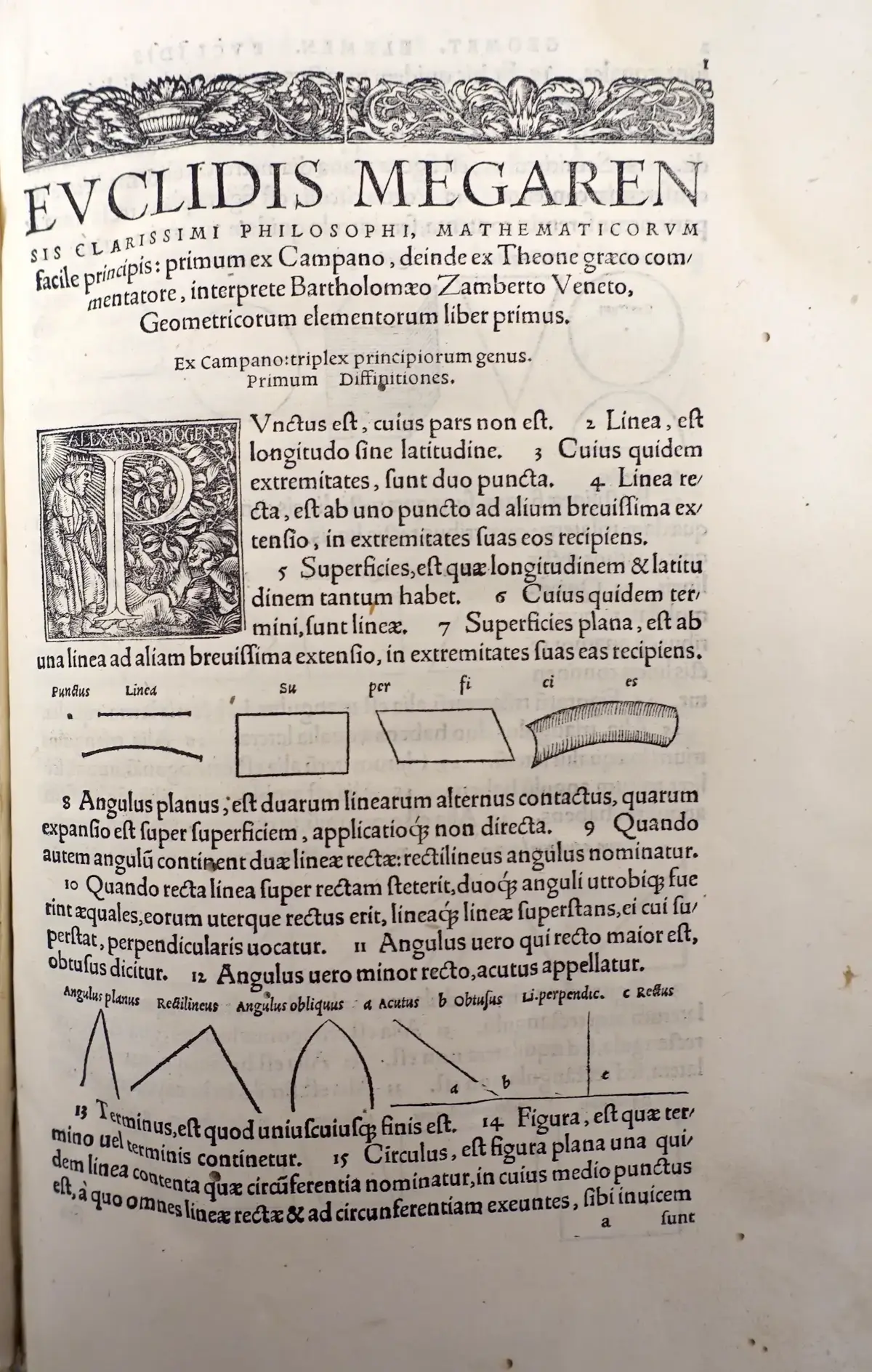
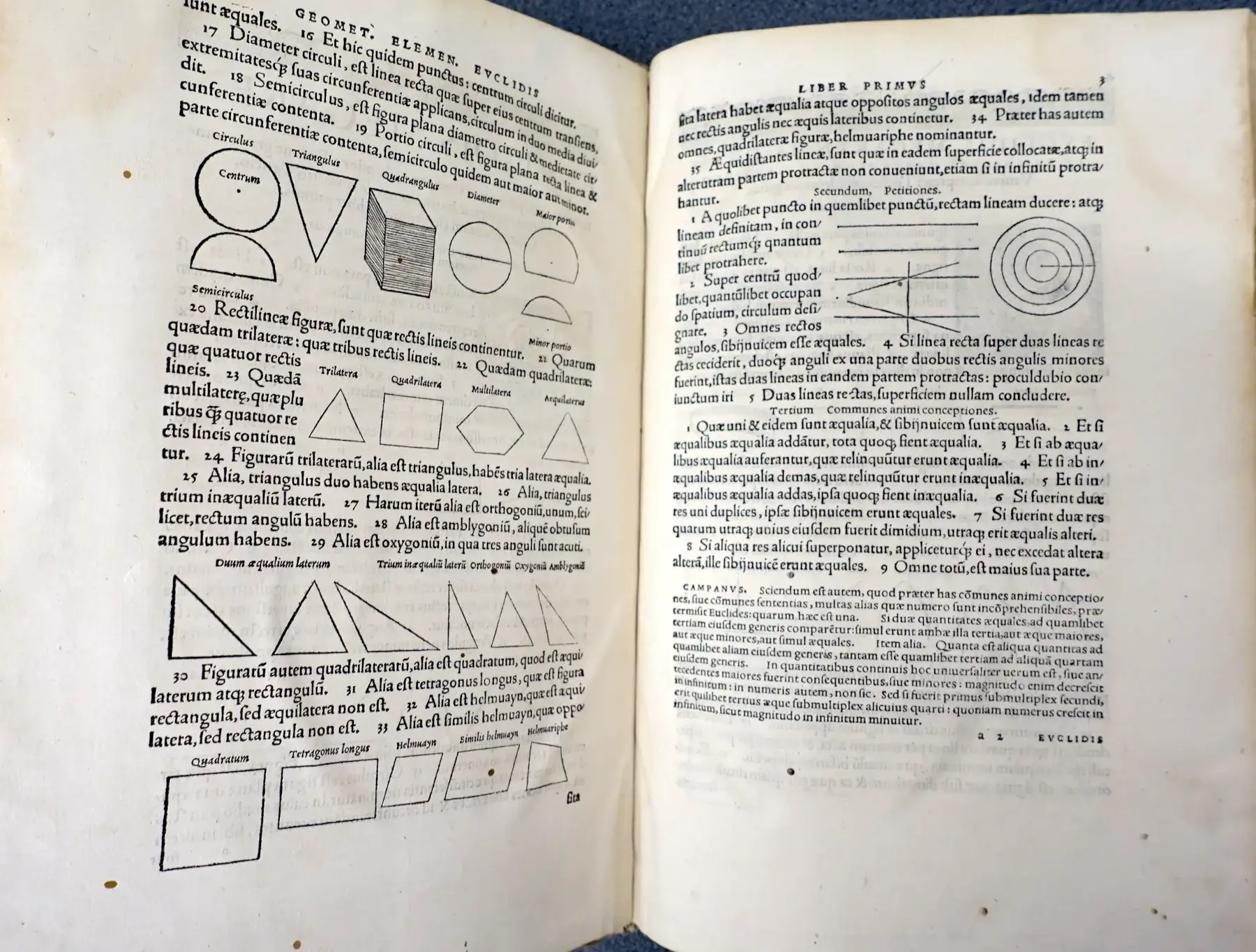
The most important textbook in the subject of geometry came from the pen of the Greek mathematician Euclid. His 'Elements' dominated the field until 1830(!) to such an extent that we still refer to geometry up to three dimensions -- that is, line / square / cube -- as Euclidean geometry.
We know relatively little about the historical Euclid. He is thought to have worked around the 4th/3rd century BC at the Mouseion in Egyptian Alexandria. Not even his dates of birth and death are certain. He may have been born around 360 BC in Athens and received his education at Plato's Academy, or he may have written his works only around 300 BC and died around 270 BC.
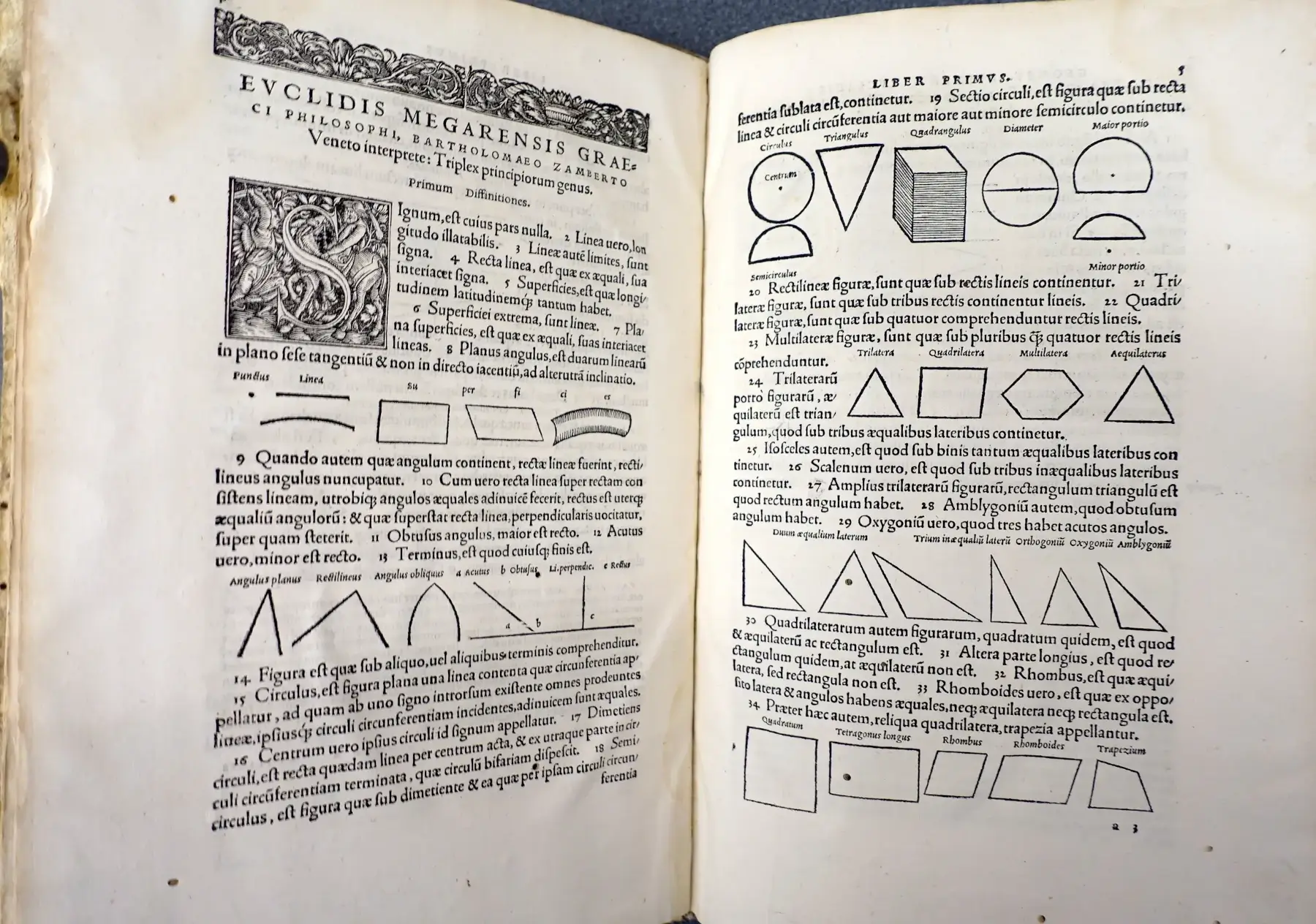
But his life story is entirely irrelevant for our purposes. It is his book, the 'Elements,' that had such a career in the Middle Ages. Starting from the point, it deals with the construction of lines and solids, and thus summarised the basic geometrical knowledge for everyone who wished to design the ground plan for a church. Squares and circles placed side by side or stacked on top of one another were for centuries the forms with which master builders constructed buildings. That is why the Elements of Euclid were held in high esteem. In every better monastic library there was at least one manuscript copy.

The dome over the square: a message in stone on the connection between the earthly and the beyond. Photo: Dean Strelau, cc-by 2.0.
What Mathematics Has to Do with God
Now our monks read Euclid with the same enthusiasm with which they also received the works of the ancient Church Fathers. And those too engaged with mathematics. For Augustine and his contemporaries took much from Plato and Pythagoras -- yes, from the philosopher after whom the famous theorem is named. This is why both the formula a2+b2=c2 and Plato's claim that geometry leads to 'knowledge of the eternally existent' found their way into Christian education. Plato saw the divine in perfect circles and squares, while he regarded the objects of the material world, subject to no geometrical rules, as a dim reflection of the light of the blazing ideas.
In doing so he inspired magnificent churches built according to strictly geometrical rules. The circle was regarded as an image of heaven, a symbol of its revolving around God the Father, just as the circle is drawn around a point. The square, by contrast, stood for the earth with its four cardinal directions. When an architect used the methods learned from Euclid to vault the square crossing of a cathedral with a dome constructed over a circle, this was a message in stone that the believer was capable of ascending from the earthly world into heaven.
A modern reconstruction of the first image with central perspective, as Brunelleschi probably painted it. Photo: sailko, cc-by 3.0.
Mathematics Becomes Fashionable
For centuries, geometry was existential for architects and yet played a similarly unimportant role in the lives of other people as it still does today: one learns the construction of an isosceles triangle at school and then forgets it as quickly as possible. What reason would there be in a normal average life to construct an isosceles triangle?
But then, sometime between the late Middle Ages and the early Renaissance, the Western world adopted Arabic numerals. They made entirely new forms of calculation possible, and with this mathematics suddenly became something that many intellectuals talked and wrote about. It was fashionable to be able to solve difficult mathematical problems. Princes kept talented mathematicians and began to concern themselves with mathematics themselves. At gatherings and in correspondence, people entertained themselves by presenting their counterpart with the most complicated mathematical problem possible, then applauding whoever managed to solve it. Humanists and artists who wished to attract the interest of a patron therefore did well to master at least the fundamentals of mathematics.
The competition for wealthy patrons was probably particularly fierce at the beginning of the 15th century in Florence, where a number of outstanding artists vied for well-paid commissions. One of them was Filippo Brunelleschi (1377-1446). In 1410 he astonished the Florentine art world with a sensation: he created a perspectively correct painting of the Baptistery, employing linear perspective for the first time since antiquity. One beholder at the time, as Vasari relates to us, was said to have been unable to distinguish between the mirror image of the Baptistery and Brunelleschi's painted image.
Graphical representation of Euclid's theory of optics. Graphic: Marco Polo / Wikipedia.
And What Does Euclid Have to Do with This?
Brunelleschi owed the inspiration for his innovative painting to Euclid's work titled Optica (= Optics). In it the Greek mathematician describes his theory of vision. It revolves around the question of how an eye perceives its surroundings. For Euclid, all objects emit visual rays that reach the eye in the form of a cone. He formulated his hypothesis as a geometrical problem, calculating the angles at which the rays fall upon the eye.
His cone of vision is built according to strictly geometrical principles: what is nearer appears larger to us because of the narrower cone of vision, what is further away appears smaller. With his Optica, Euclid provided Brunelleschi with the theoretical foundations for constructing, on the basis of mathematical laws, how he would have to draw the Baptistery in order to make it appear three-dimensional despite the flat surface.
Euclid's Optics, the Invention of Perspective, and its Application
The first surviving painting conceived according to Euclid's linear perspective is a fresco by the Florentine artist Masaccio. The coffers of the barrel vault decrease systematically along the vanishing lines from front to back. The painting brings perspective into play. Generations of artists were to grapple with the mastery of perspective and lead it to ever new heights. The high point of this development is the Rococo frescoes. Masters of their craft succeeded, by means of the laws of perspective virtuosically applied, in depicting on a practically flat church ceiling a view into the sky open above.
The foundation of all this was Euclid. Through him, geometry and painting became two sides of the same coin. After Masaccio, no artist who wished to be considered modern could avoid extensive mathematical studies. And this had a pleasant side effect for their social standing: gone were the days when painting was regarded as a mere craft. Now theory stood at the centre, with all the social consequences. The artist climbed the social ladder. Access to the princely court was opened to him. He discussed as an equal with humanists, politicians, and courtiers. Though the courtiers especially were anything but pleased about the new competition. How hard they made life for the intruders is illustrated by an anecdote from the life of Leonardo da Vinci: he was a guest at the court of Ludovico Sforza and practically demanded from him the opportunity to demonstrate his learning in a scholarly debate -- yes, such a thing existed at the time, and it was genuinely popular. In February 1498 all members of the court of Ludovico Sforza came together to see how this illegitimate son of a minor lawyer from Vinci would fare against the illustrious nobles and learned doctors of the universities. Of course Leonardo emerged victorious from this debate, also because he had had a good mathematics teacher.
His friend Luca Pacioli belongs among the greatest mathematicians of his time. From him Leonardo da Vinci learned the laws of perspective that he was to apply so masterfully in his later life. The two geniuses exchanged views on questions of art as well as mathematical problems, and the joint fruit of their reflections flowed into the book 'De divina proportione' (= On Divine Proportions), published in 1509. Leonardo da Vinci personally illustrated the text by Luca Pacioli on the Golden Ratio.
That the 'Elements' of Euclid with their fundamental research into geometry were 'elemental' for Pacioli is expressed by a portrait painted in 1495: the hand of the brilliant mathematician rests on Euclid's writings while designing a geometric figure.
The Basel Euclid
Soon it was no longer only the Italian artists who spoke of the significance of Euclid. His works became required reading north of the Alps as well. Albrecht Durer was an important link in the chain of knowledge transfer. He will be the subject of the second part of our essay 'Mathematics: The Queen of Sciences.'
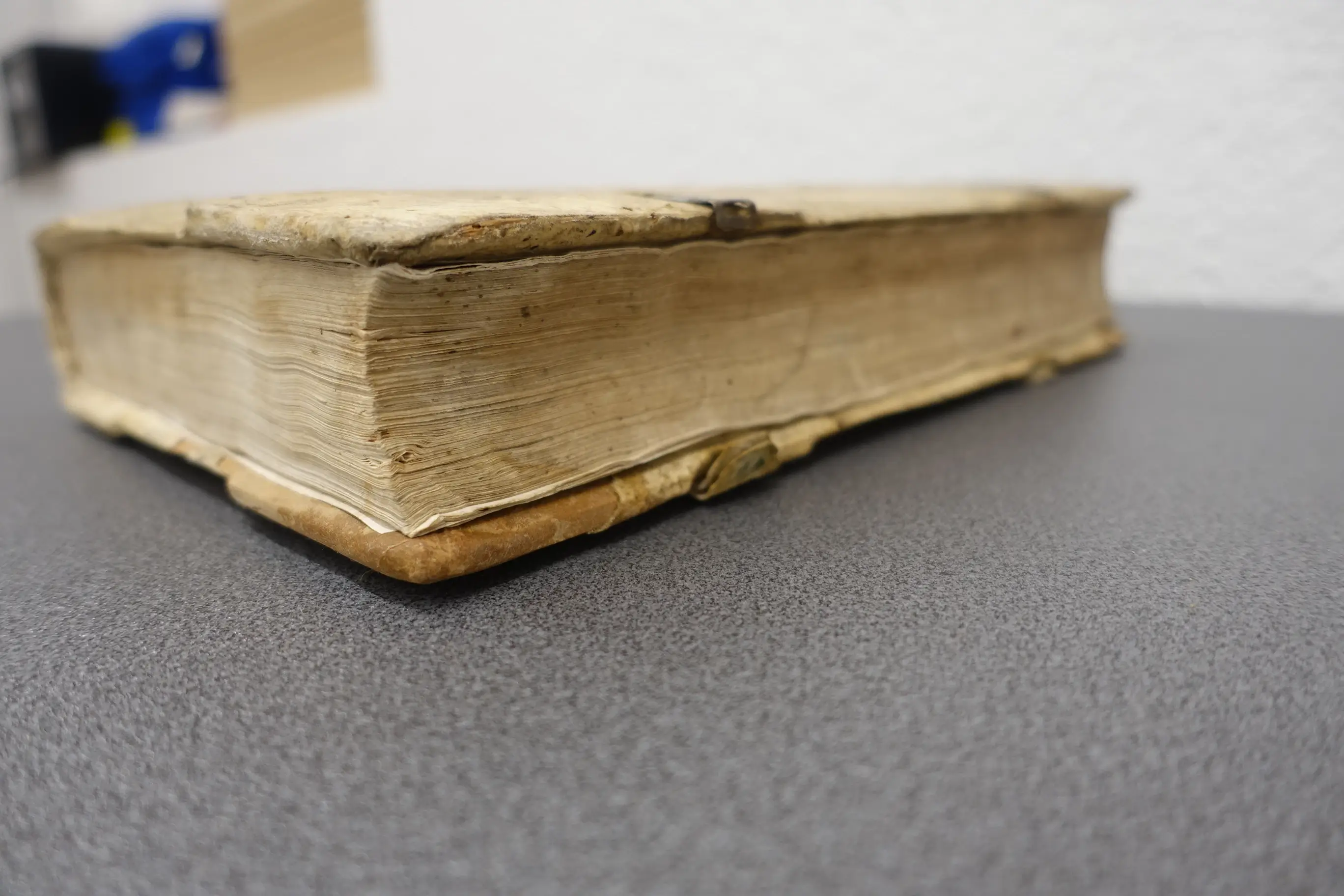
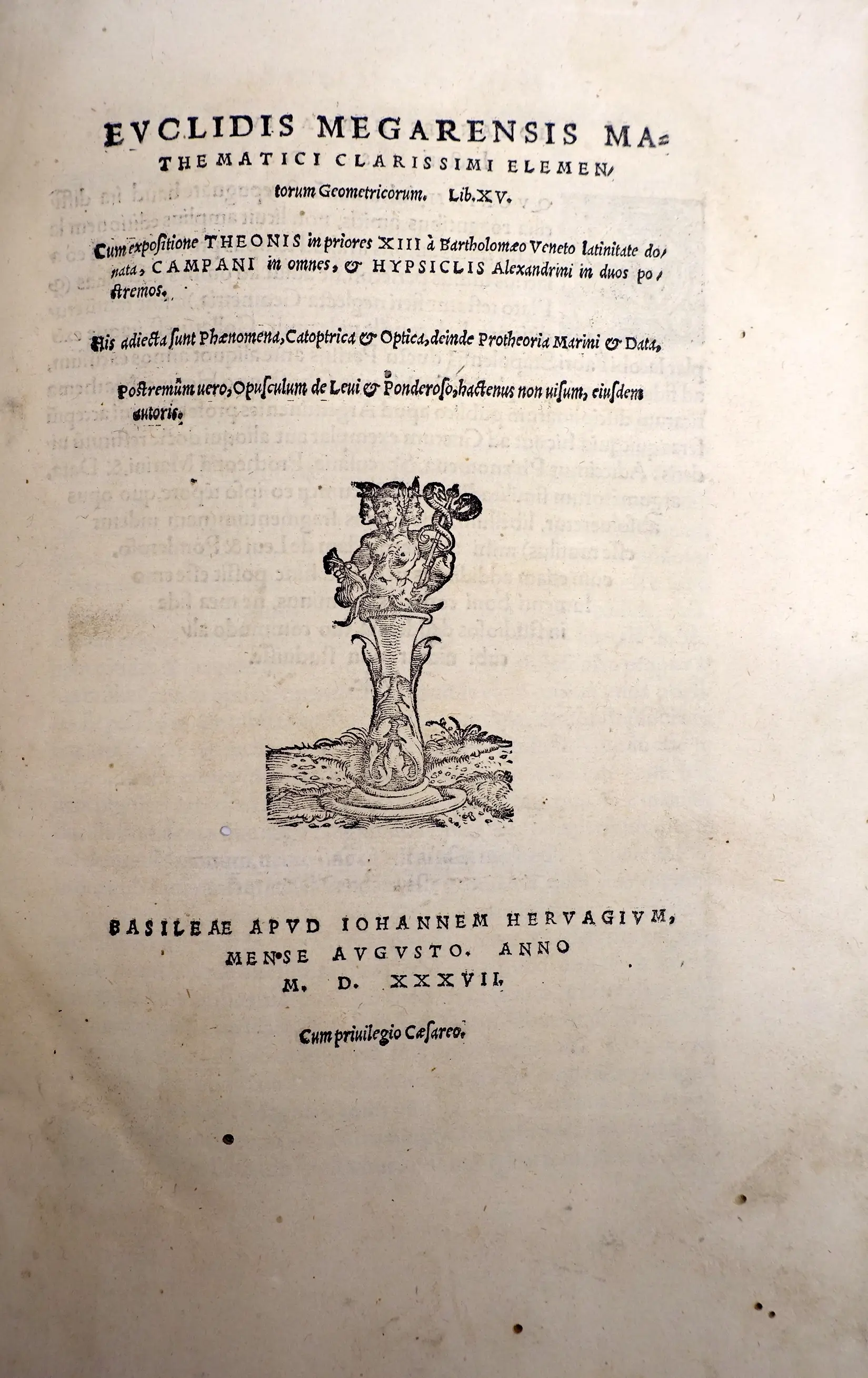
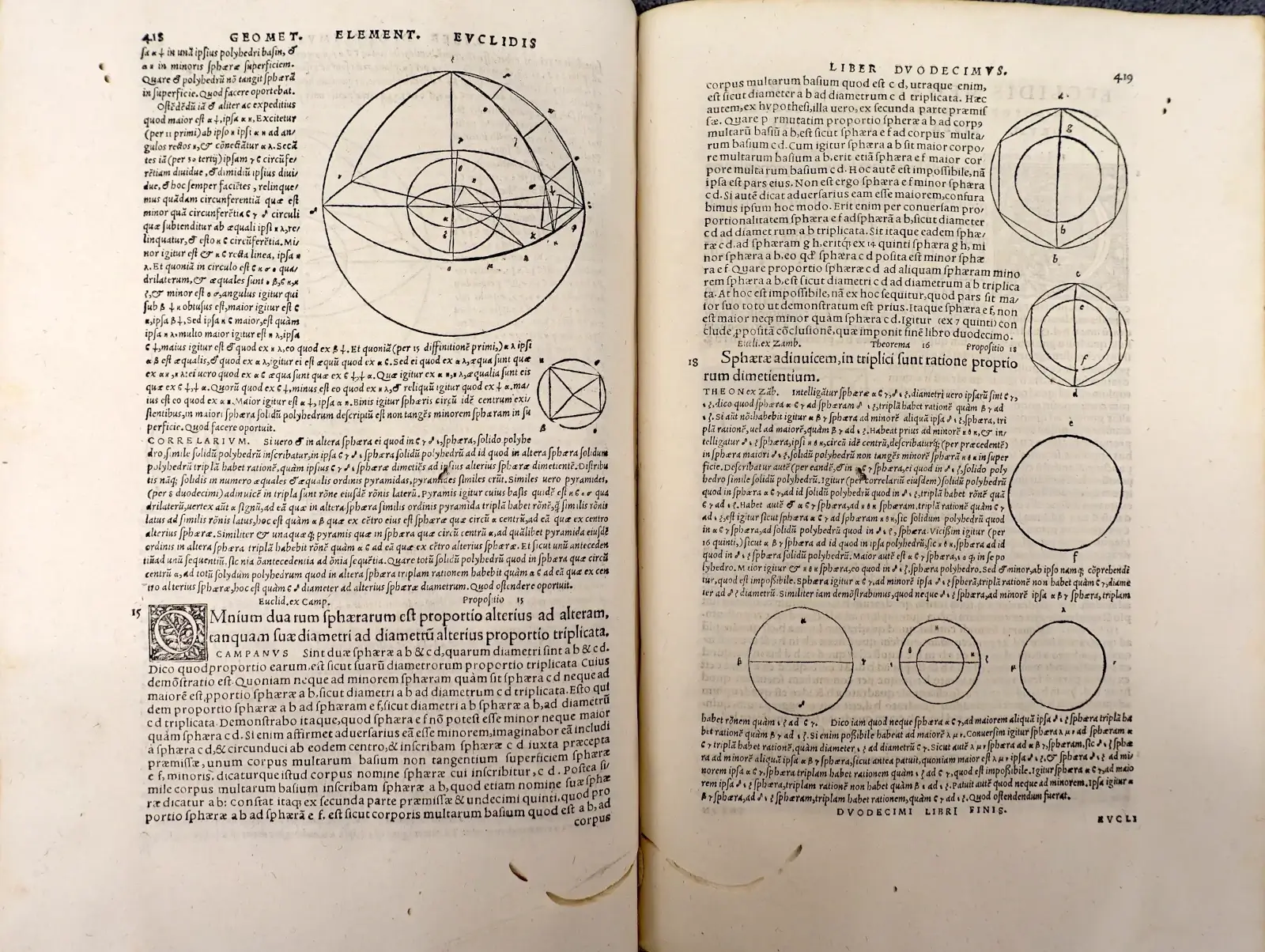
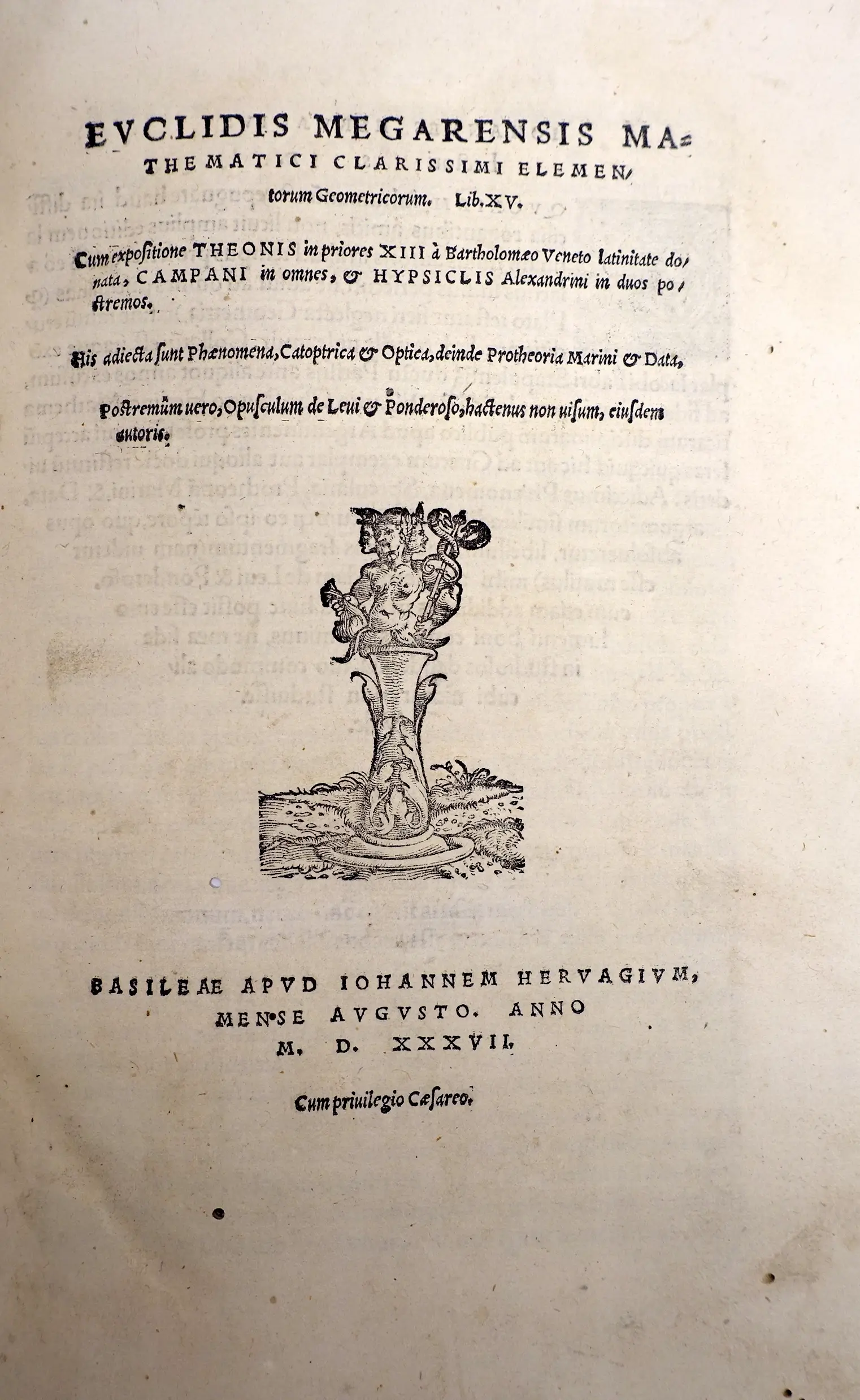
The Basel publisher Johann Herwegen scented an excellent business opportunity and in 1537 published a complete edition of the works of the Greek mathematician. It contains far more than the Elements known since the Middle Ages. The buyer also received the Optics so important for artists, and several shorter writings of the great mathematician that need not concern us here. In any case, the MoneyMuseum is pleased to have succeeded at the Stuttgart antiquarian book fair of 2020 in acquiring a copy from the Salzburg antiquariat Johannes Muller.
The portrait of Philip Melanchthon, painted in 1543 by Lucas Cranach.
Why Does a Reformer Write a Preface to Euclid?
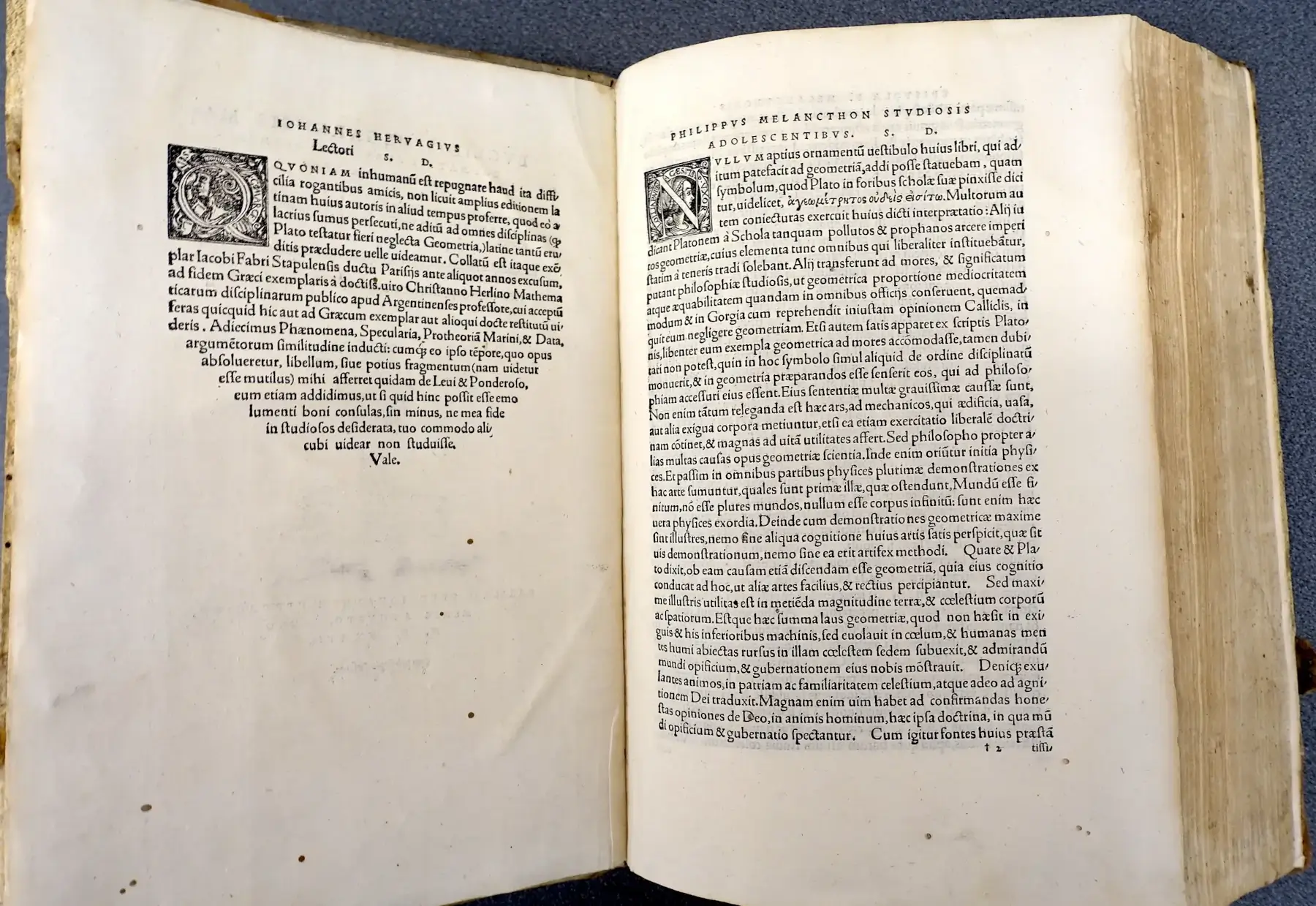
The edition of Euclid of 1537 preserved in the MoneyMuseum is something quite special, for the well-known Protestant theologian and companion of Martin Luther wrote a preface to it. We should not be surprised by this: the interest of humanist scholars and theologians in mathematics was enormous. They felt themselves inspired above all by Jewish Kabbalah. The goal of the Kabbalah is to convert the letters of the Bible into numerical values, in order to gain insight into God's plan through complicated mathematical calculations. This seemed plausible -- at least at the time -- even to Protestant theologians who assumed that the end of the world was near.
A personal friend of Martin Luther, the pastor Michael Stifel, was known for his attempts to calculate the date of the end of the world using mathematics. He fixed it at the 8th hour of 19 October 1533. And when the world did not end after all, he took up the study of mathematics at the University of Wittenberg, going on to become one of the most significant German mathematicians. Melanchthon wrote a preface to his Arithmetica Integra just as he did for our new edition of Euclid. After all, it was a matter close to his heart to promote the cause of mathematics with his scholarly authority. It was probably thanks to Melanchthon, for example, that the University of Wittenberg had chairs in mathematics at all.
There was one thing, however, that the Basel publisher Johann Herwegen had not taken into account: Melanchthon was controversial in the scholarly world because of his vehement advocacy for the Reformation. And this meant that no Catholic believer, let alone any Catholic library, wanted to buy a book in which the preface of a Reformer was printed. The subsequent editions of Euclid were to be published without this preface and would sell far better.