Georg Agricola: Der Vater der Montanwissenschaften
by
Ursula Kampmann

There are few 16th-century works whose illustrations are still known to a broad public today. The undisputed leader among them is Agricola’s *De Re Metallica Libri XII* (12 Books on Mining). The reason for this is that no reference book or museum that even mentions the history of mining and metal extraction fails to include these impressive illustrations.
In its day, *Agricola* offered an outstanding summary of the most up-to-date knowledge on mining, metals, and smelting. It spread throughout Europe and far beyond: in addition to German, the author’s native language, and Latin, the scholarly language of the time, it was published in Italian as early as 1563, in Spanish in 1569, and in Chinese (!) in 1643. But even those who did not speak any of these languages were able to make use of the book. Thanks to the detailed illustrations, any expert could replicate and use the equipment depicted within.
So let's take a look at what it took in the 16th century to write a bestseller for mounting technicians.
Artikeltext:
The Historical Background
Before we examine the author’s life and work, we must take a look at the historical context in which this book was written. For the world was in a state of flux at that time—both economically and politically. Central Europe was preparing to become the dominant region of the globe, and a major reason for this was the rich silver deposits in Germany, which, when minted into hard currency, transformed international trade and, with it, the political landscape.
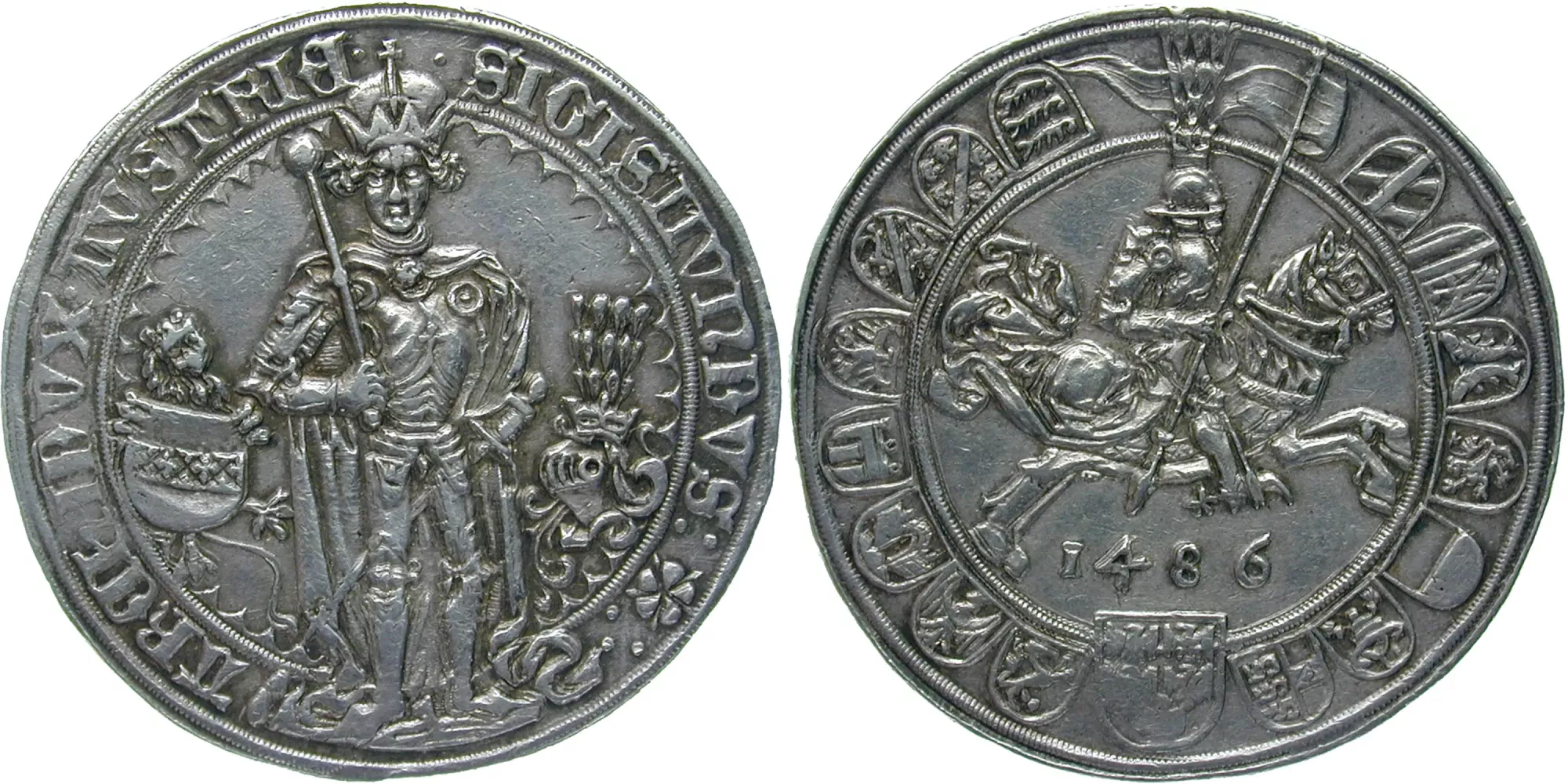
As early as the mid-15th century, the miners of Schwaz were extracting such vast quantities of silver that the rulers of Tyrol—the Habsburgs—rose to the top of the German nobility. The rulers of Saxony also benefited from the silver boom: In the first half of the 16th century, the cities of Freiberg and Annaberg developed into extremely profitable hubs of silver mining. By the mid-16th century, these cities had more inhabitants than all other cities in the state combined, including the capital and commercial centers such as Dresden and Leipzig.
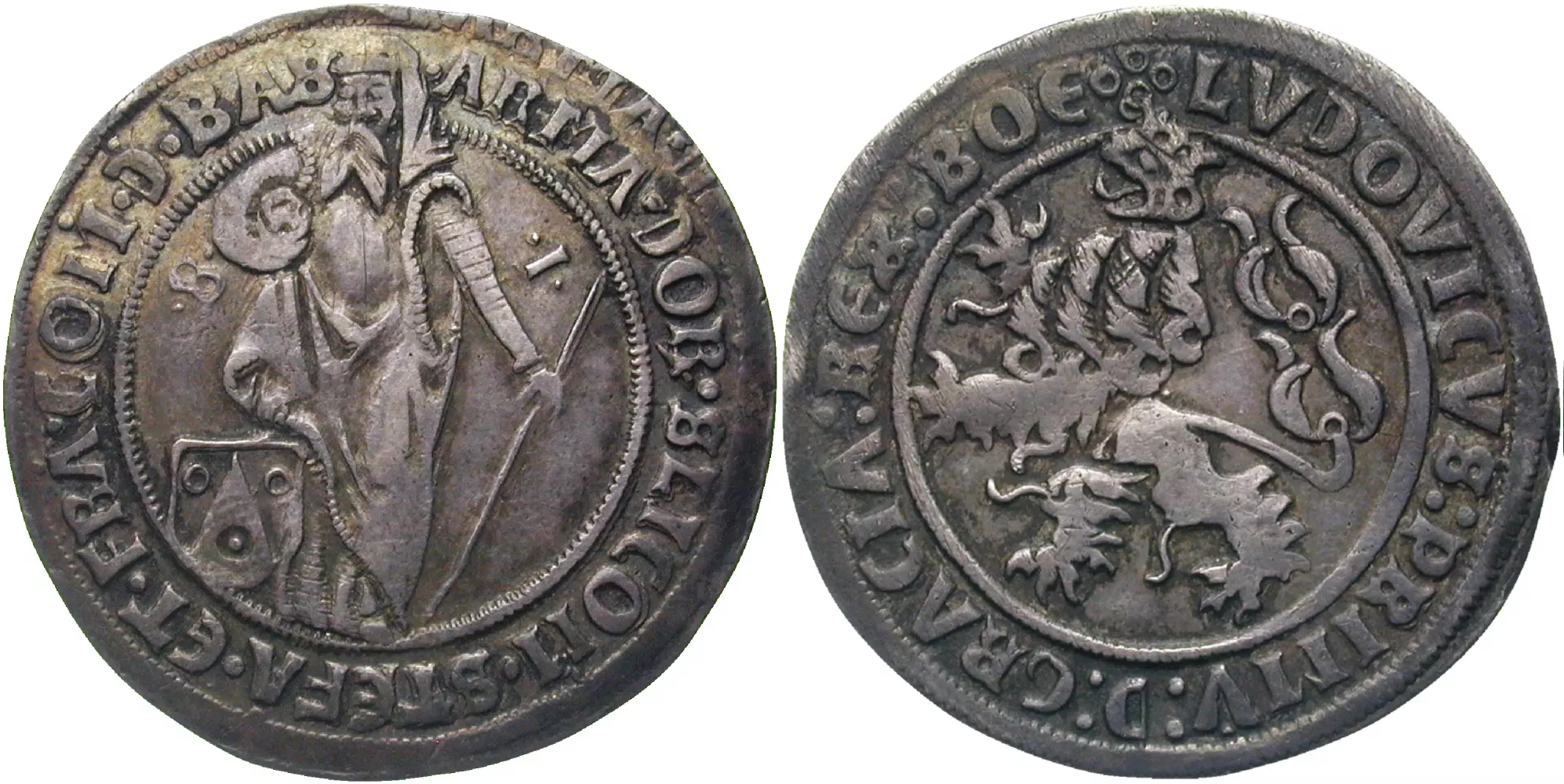
And then silver was discovered in neighboring Bohemia as well: In St. Joachimsthal—now Jachimov—so much silver had been mined since the 1520s that the “talers” minted from it—named after their place of origin, Joachimsthal—flooded the silver market and gave their name to a denomination that would go on to achieve worldwide fame.
In short, silver was an excellent business—for everyone involved, and there were many. Thanks to the mining charter, the princes were considered the sole owners of the mineral resources. But since they did not have enough capital to finance silver mining, daring investors from the merchant class stepped in to fill this gap. In the process, they amassed such vast fortunes that some bourgeois dynasties were able to rival the nobility in influence. The best-known example is probably Jakob Fugger the Elder, whose descendant, Jakob Fugger, known as “the Rich,” used his wealth to influence the imperial election.
But it wasn’t just the big players who profited from the silver boom. The men and women(!) who sought and found work in silver mining were also paid far better than in other professions. Thanks to their skills, they were sought-after specialists whom the princes could never attract enough of to their lands. In this way, mining engineers secured freedoms that hardly any other profession enjoyed. Even though the dangers in the mine were great, the work was hard, and the training was long, it was worth it for each individual to become part of the mining industry.
In other words: In the 16th century, many people considered whether they might want to become involved in the mining industry in some way. And, of course, it wasn’t just silver that was of interest; after all, there was also copper, lead, tin, bismuth, mercury, gold, and, of course, iron!
A comprehensive book on this industry was practically destined to become a bestseller.
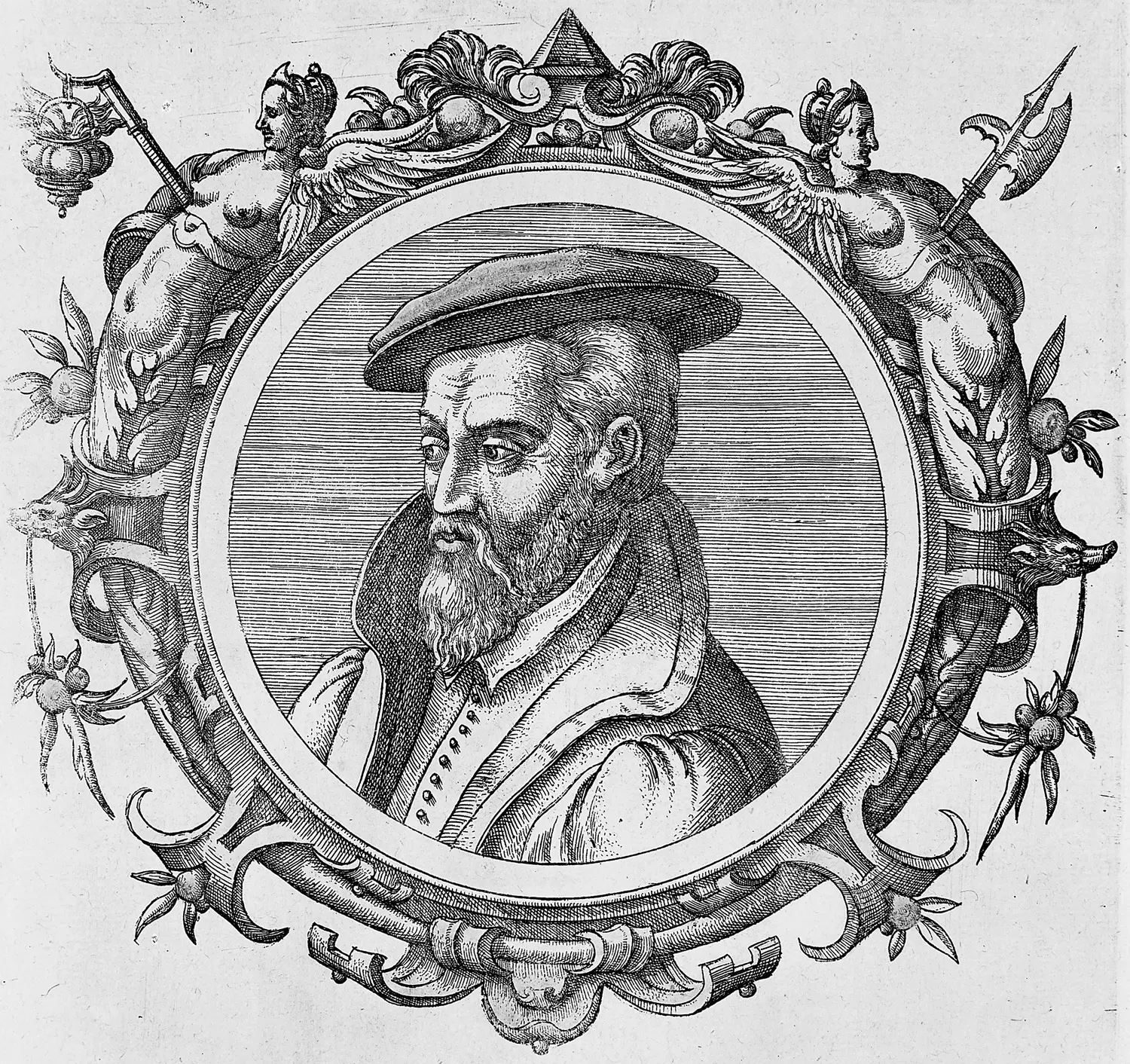
A Few Remarks on the Life of Georg Pawer, or Georgius Agricola
Georg Bauer, the second of seven children of a clothmaker and dyer in Glauchau, Saxony, also became interested in this lucrative field after completing his studies. Yet he had actually pursued a career in classical humanities. After attending a Latin school and completing his studies, he took up the position of principal at the Latin school in Zwickau: his friend and superior had moved to nearby Joachimsthal. It was likely through his friend’s letters that Agricola first received information about silver mining.
But that was not yet Agricola’s focus. He resigned from his position as rector to move to Italy, where he not only completed his medical studies but also worked as a sort of editor at what was arguably the most important scientific printing house. It was likely while working with Aldus Manutius in Venice that he learned just how crucial illustrations could be to understanding a specialized text.
After his return, Agricola moved to Joachimsthal in 1527, where he worked for several years as a physician and pharmacist. It was there that he wrote his first work on mining in 1530. It was to be only the first in a long series of publications, most of which—we also know of a treatise against the Turks and one on the plague—dealt with mineral resources and their extraction.
Just how well connected the Saxon physician already was within the international community of humanists—often referred to in this context as the “Republic of Scholars”—as early as 1530 is demonstrated by the fact that the great Erasmus of Rotterdam wrote the preface to this first book. He likely also established contact with the printer or publisher, since most of Agricola’s publications appeared in distant Basel. This was also the case with the first edition of his masterpiece, which we are pleased to present to you today—though not as a first edition, but rather in a version from the year 1657.
“De Re Metallica Libri XII” is the culmination of a scholar’s entire life’s work. Agricola likely completed his manuscript around 1550. However, the elaborate production process—which we will learn more about later—prevented it from being printed during his lifetime. The work was not published until 1556, one year after Agricola’s death.
Yet even before the publication of this book, which we admire so much today, Agricola was regarded as one of the leading humanists of his time. When he died in Zwickau on November 21, 1555, the then-famous poet (and devout Protestant) Georg Fabricius described him in a letter to Luther’s companion Philip Melanchthon as “an extraordinary ornament of our fatherland”—even though Agricola remained a Catholic throughout his life and wanted nothing to do with the Reformation.

In 2021, the MoneyMuseum in Zurich was able to acquire a Latin edition of Georgius Agricola’s work from 1657 from a list compiled by the antiquarian bookseller Johannes Müller. It was published in Basel as part of a collection of Agricola’s major works, serving as a sort of complete edition. This is a wonderful opportunity to take a closer look at Agricola’s seminal work on mining.
About the Content
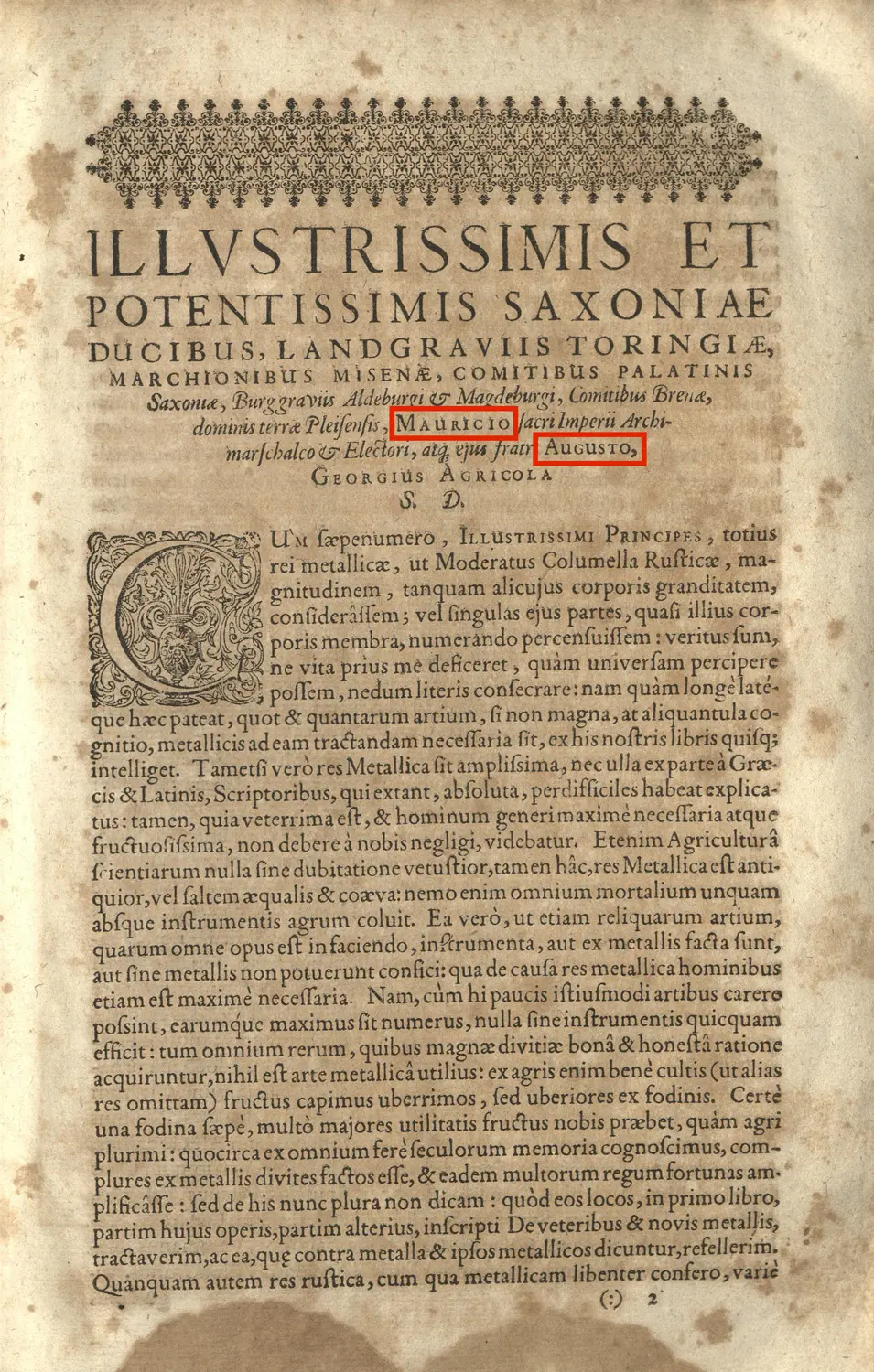
Like any good humanist work, Agricola’s book begins with an introduction in which he establishes not only his own expertise but also the importance of his subject. This introduction was of the utmost importance in motivating the powerful figures of the time to send him gifts of honor, thereby recouping the high printing costs in retrospect. We must not forget that authors in the 16th century did not yet receive royalties. They financed themselves by sending the complimentary copies they received from the printer to powerful (and wealthy!) men, who in turn rewarded them with a gift. These were primarily the individuals to whom the book was dedicated—in our case, Moritz of Saxony and his brother August, who was to succeed him as Elector in 1553.
What strikes us as particularly remarkable today is that Agricola devotes considerable attention in his introduction to the possibilities and limitations of alchemy. To understand this, we must realize that his contemporaries did not yet possess our knowledge of the atomic structure of the elements, but instead viewed with fascination the transformation of a wide variety of substances through chemical processes. Most educated people at the time believed that, eventually, a wise man would find a way to produce gold and silver. Agricola, too, considered this possibility, but in his introduction he points out the significant degree of uncertainty involved and therefore advocates the method of mining—which, though considerably more expensive, is a sure method. The fact that Agricola felt this was necessary speaks to the mindset of the educated world of the 16th century.
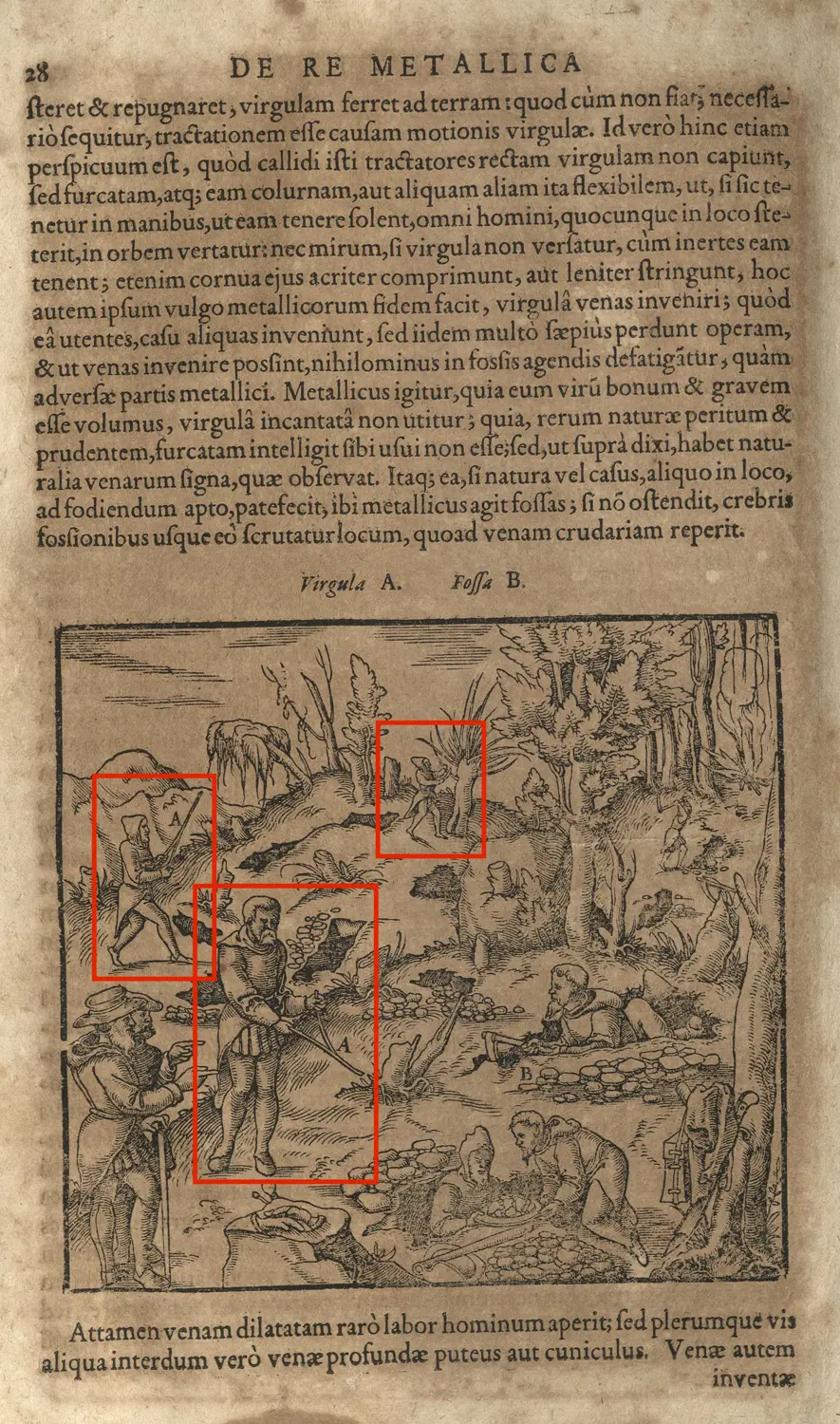
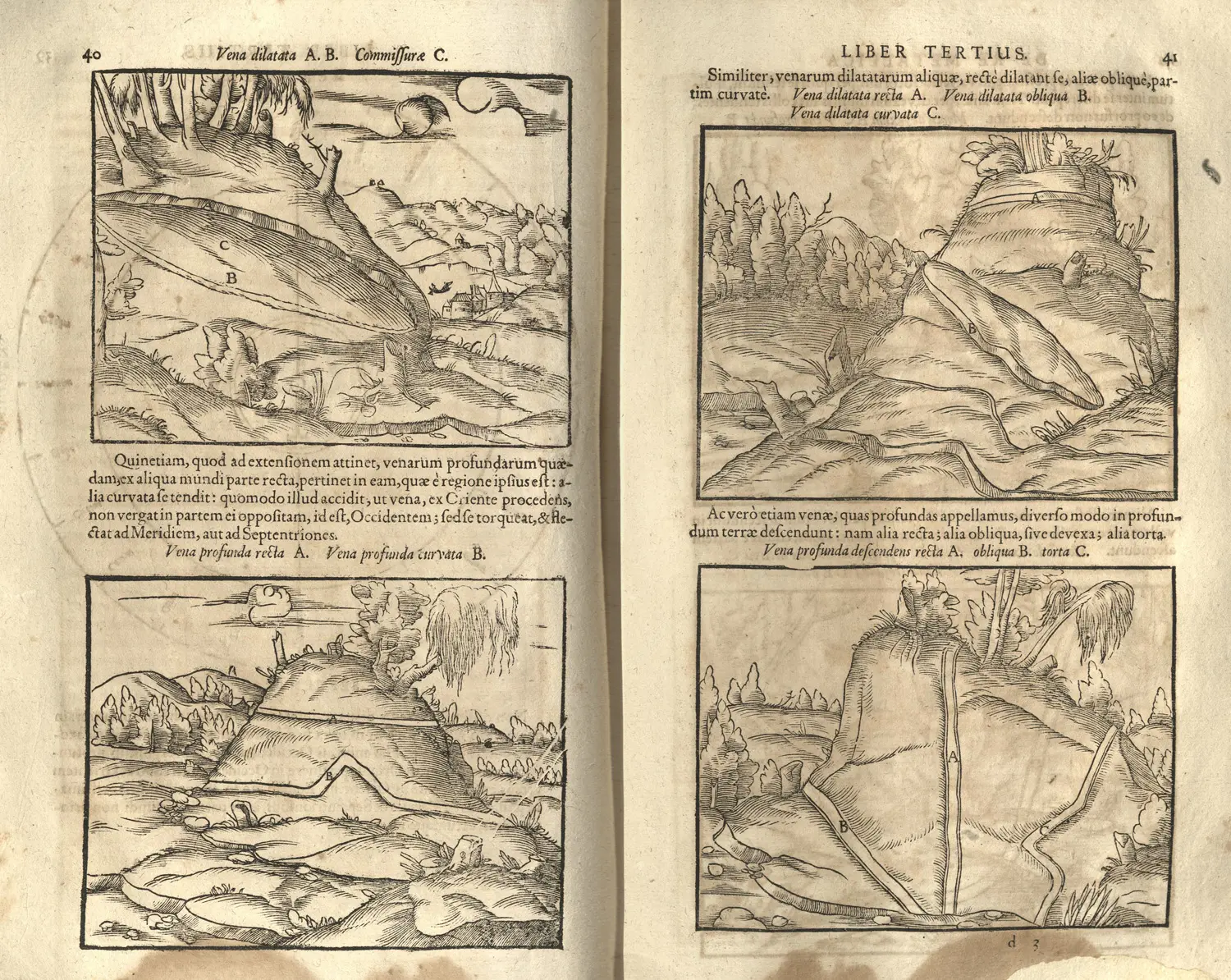
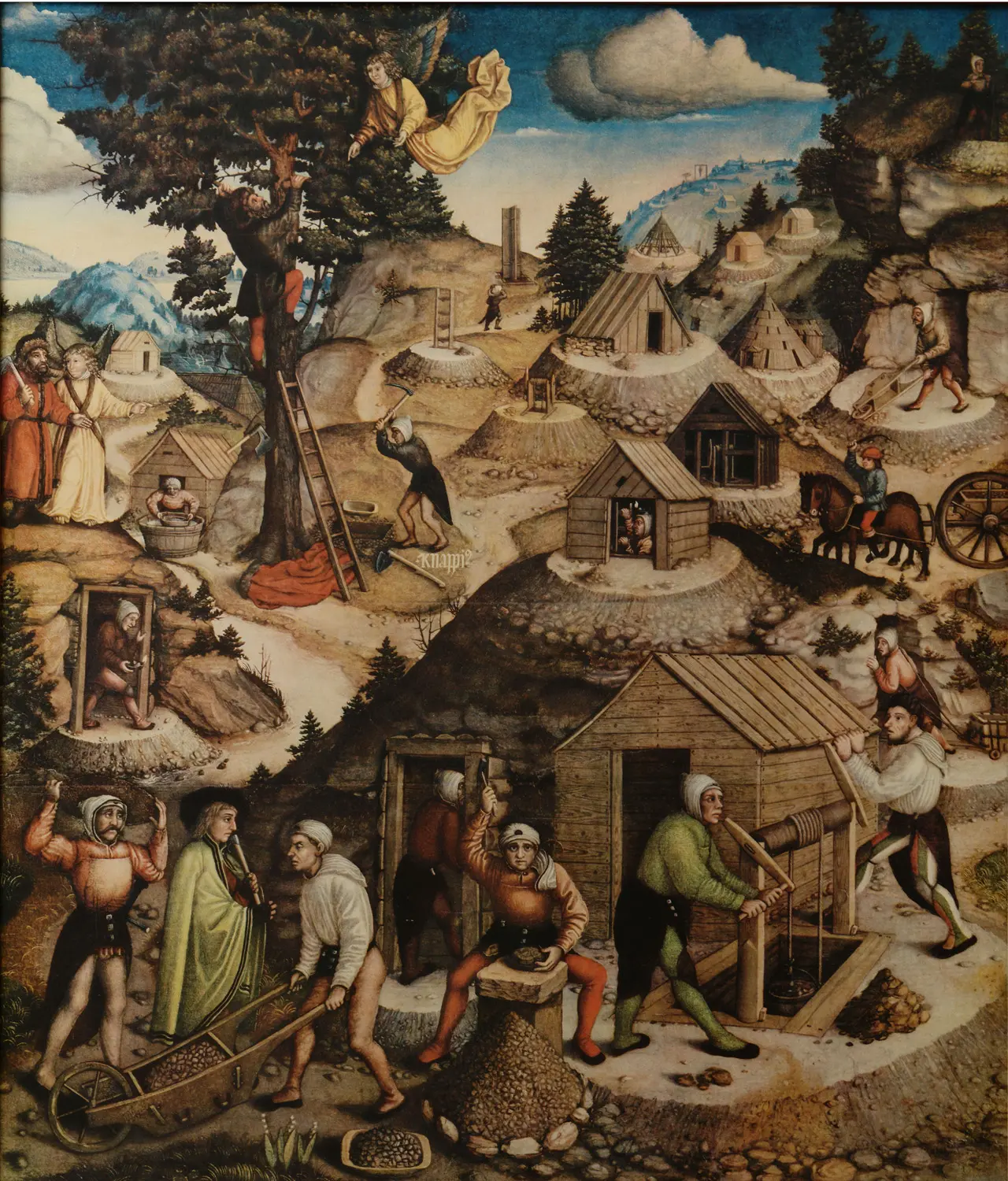
Similarly, Agricola refutes the widely held belief of the time that the discovery of a silver vein anywhere was purely a matter of luck. He contrasts the scientific methods for locating mineral deposits with all the wild men and dwarves who, in pious legends, show the virtuous miners a rich silver vein. In his first four books, Agricola describes how to locate mineral deposits, trace the ore-bearing vein within the mountain, and mine it without having to remove too much waste rock.
Even though we probably wouldn't use a divining rod today, as the prospector does in Fig. 9, test pits and knowledge of the course of ore veins are still of vital importance.
Incidentally, Agricola had a specific example in mind: He knew that the discovery of the rich silver deposits at Joachimsthal had not been a coincidence. It was the result of a targeted and lengthy prospecting effort. The Saxon investors, who had made their fortunes in Annaberg and Freiberg, sent Saxon experts to the neighboring Kingdom of Bohemia—that is, to the other side of the so-called Ore Mountains. There they searched systematically until they found an area where several ore-bearing veins came close to the surface. There they founded their mining town—incidentally, only after extensive negotiations with the local ruler and his king regarding the distribution of profits.
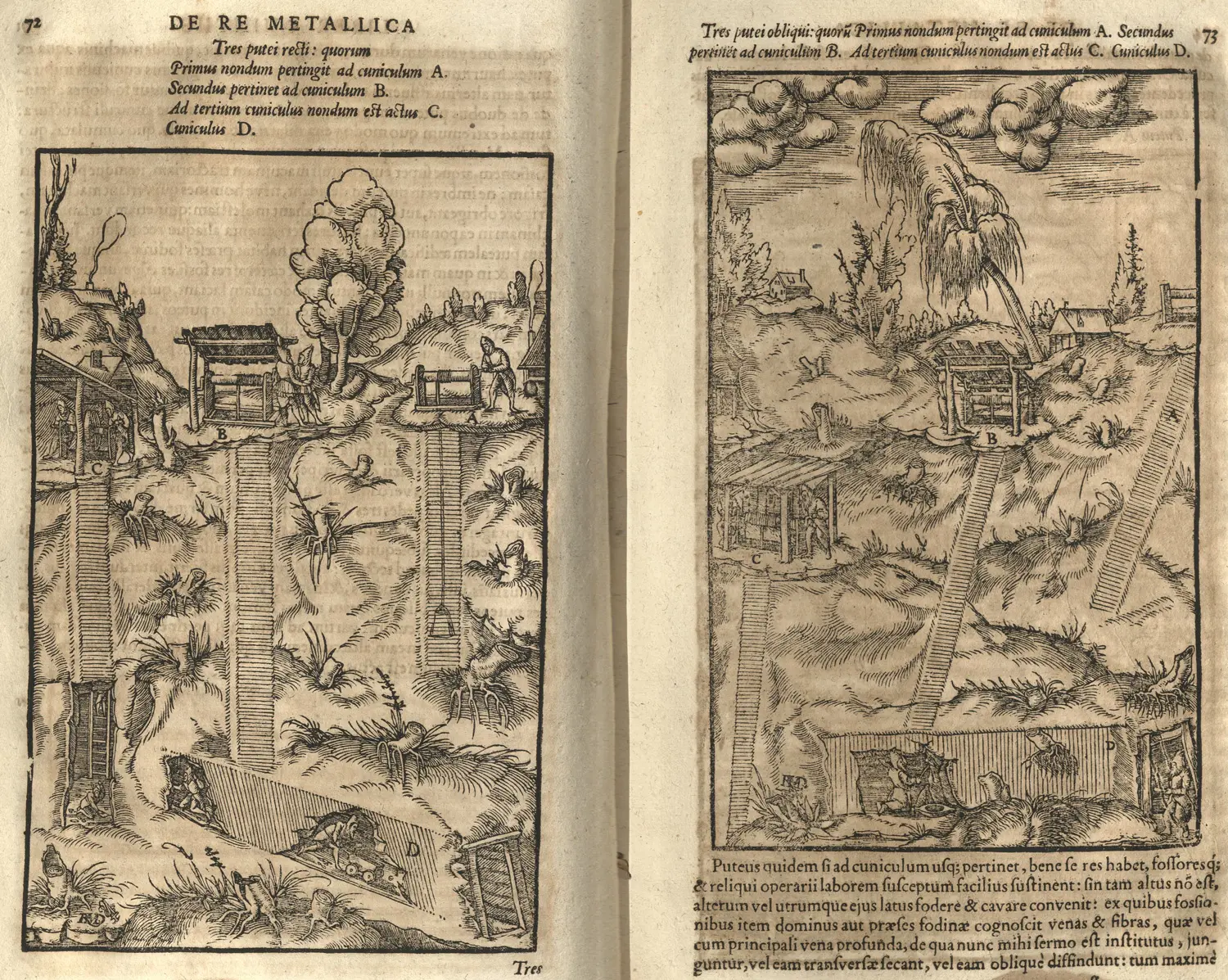
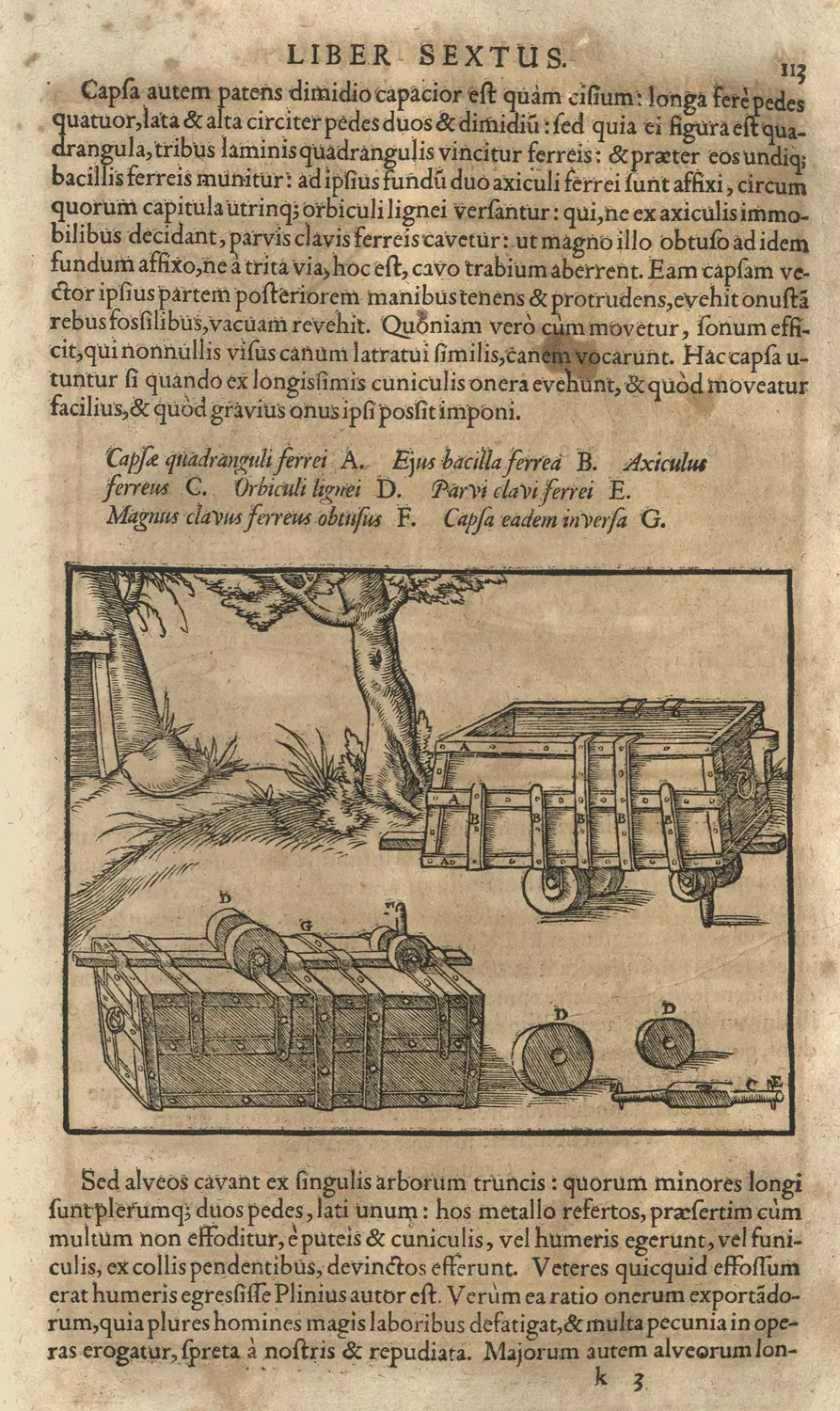
Agricola devotes only two chapters to actual mining, but these pages provide us with a wealth of realistic insights into the daily lives of miners. Just imagine what it’s like to climb down a rickety wooden ladder many meters underground, only to spend hours there, hunched over, using a pick and hammer to break up the rock, which another miner then hauls to the collection point in a wheelbarrow or mine cart, where it’s pulled up in a bucket via a chain winch!
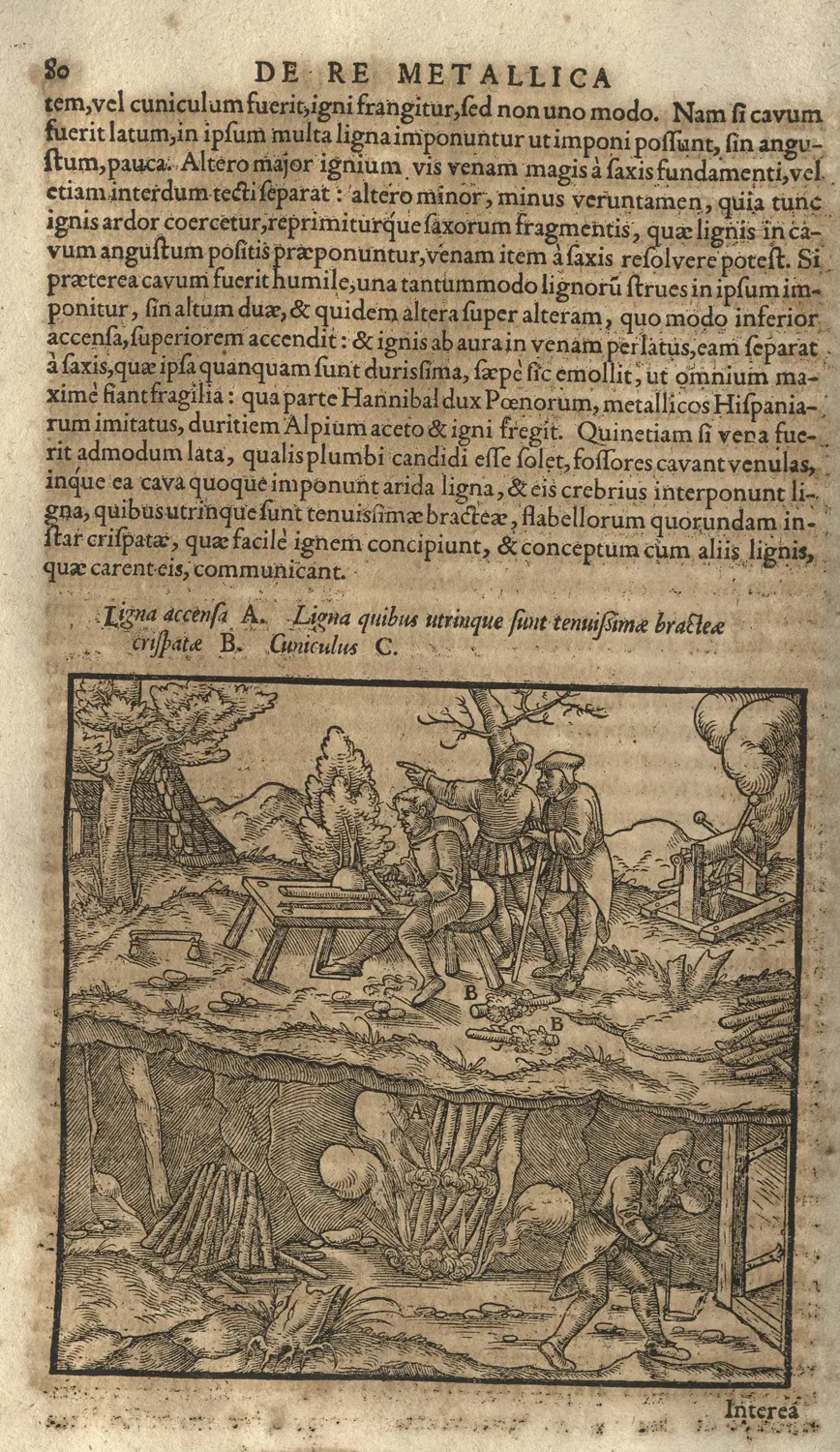
The very thought of setting fires deep within the earth’s tunnels—using their heat to weaken the surrounding rock, making it easier to break away but not so weak that the tunnel would collapse—is likely to make any modern safety officer break out in a cold sweat. The toxic gases produced by the fire could only escape through the narrow extraction holes. It took a great deal of experience and luck to use this technique in such a way that no one was harmed!
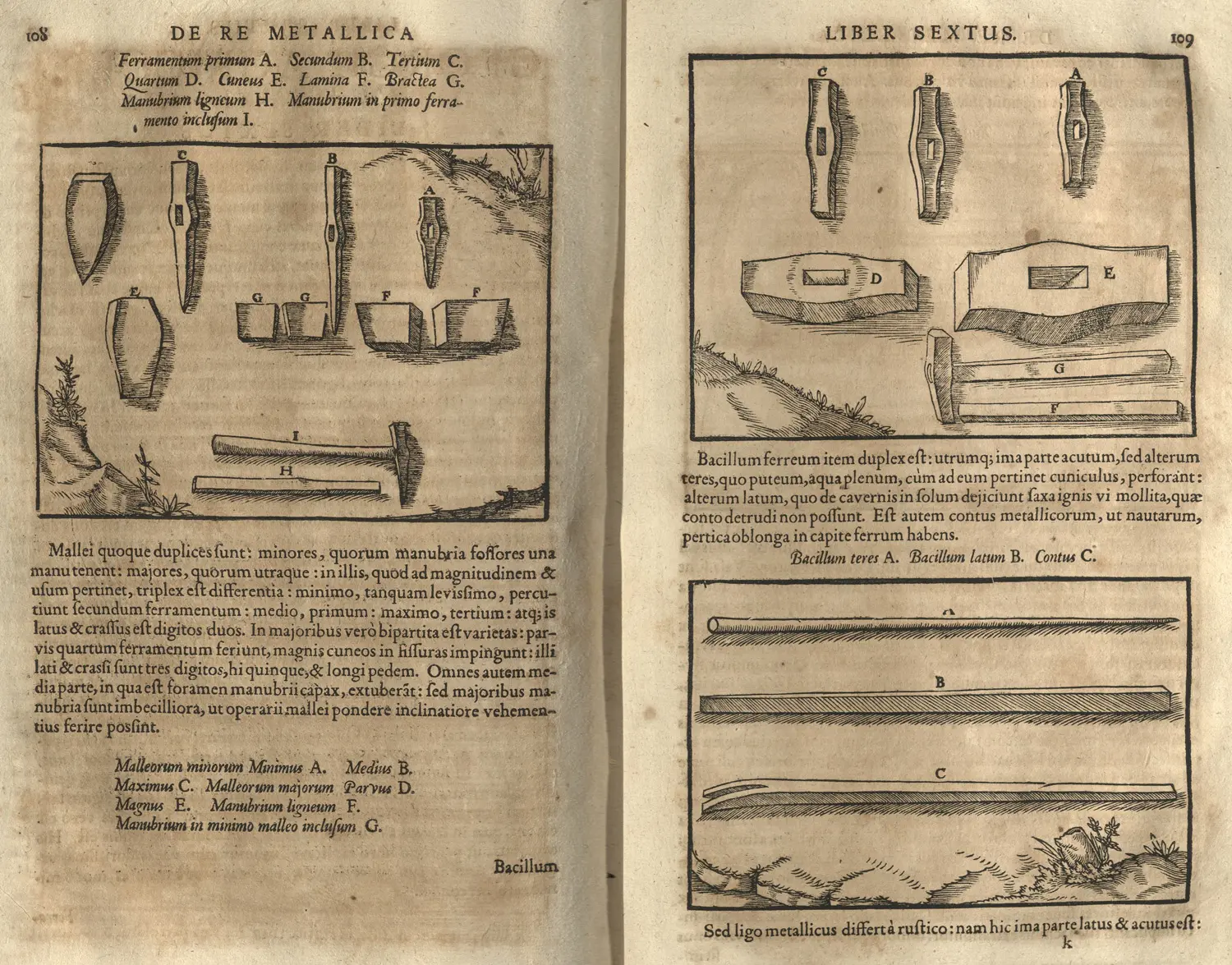
Agricola also illustrated and explained in great detail what a miner’s tools had to be like—so precisely, in fact, that a blacksmith had no trouble crafting such equipment based on his sketches. This is how new ideas, such as the so-called “Grubenhunt,” spread. This was a small vehicle that rolled on rails and was used to transport ore-bearing rock to a collection point. Thanks to Agricola, this tool was soon in use throughout Europe and the New World.
The third part of the book, consisting of six chapters, is devoted to the processing of mineral resources. Agricola describes how the ore-bearing rock must be crushed and treated before it can be smelted in large furnaces. This work could not be carried out in the idyllic setting of a small artisanal workshop; rather, it required truly industrial structures—with all the consequences that entailed. The mining regions of Joachimsthal and Schwaz, which seem so idyllic to us today, were overpopulated and sprawling during their heyday. There was hardly any greenery to be seen. The surrounding forests had been cleared, and the air was polluted by black clouds of smoke. There was constant noise, with the water-powered crushing mill setting the unmistakable rhythm day and night. Working under such conditions was no pleasure!
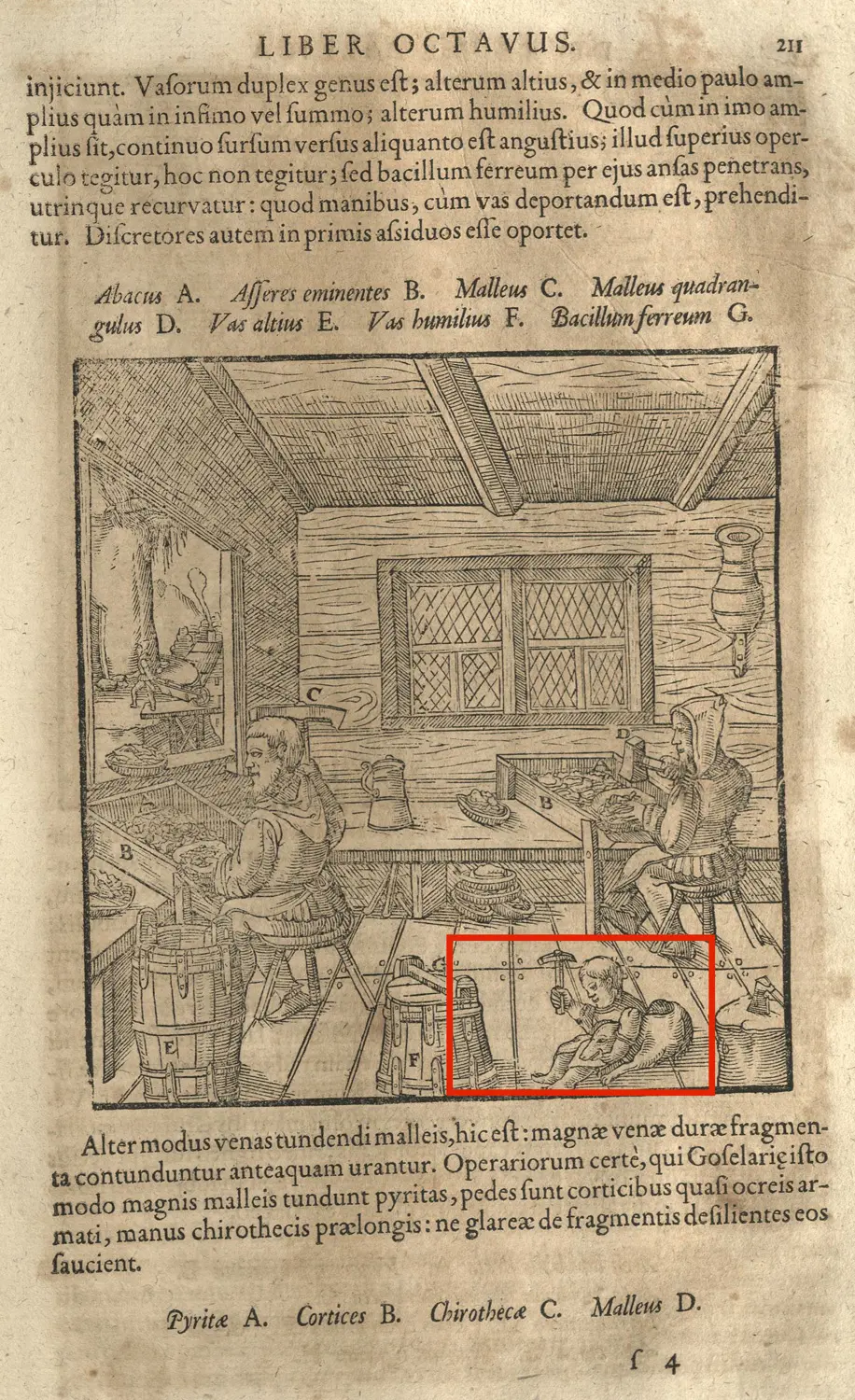
But the work was worth it, even for the men and women employed there. They never went hungry, because everyone—truly everyone—found well-paid work in the mining regions. This is evident from the illustrations, which are also of interest from a social history perspective. Women were often employed specifically for sorting and further crushing the rock coming from the crushing plant.
Even children found paid work that allowed them to contribute to the family income. At a time when children were regarded as small, imperfect adults, this was viewed quite positively.
The Renaissance and Technological Progress
While the text of a book is usually its most important content, Agricola’s work is better known for its realistic illustrations. These illustrations enabled mining engineers around the world to replicate the methods used in Joachimsthal—even if they could not read the text.
That was a first! For centuries, illustrations had been mere decorative embellishments whose accuracy had hardly mattered. But that changed with the Renaissance. Thanks to the newly discovered principle of perspective, it became possible for the first time to reproduce reality in fine detail. This gave rise to a completely new form of knowledge transfer. From then on, text and images complemented one another in reference books, allowing the functioning of an object to be understood in two independent ways.
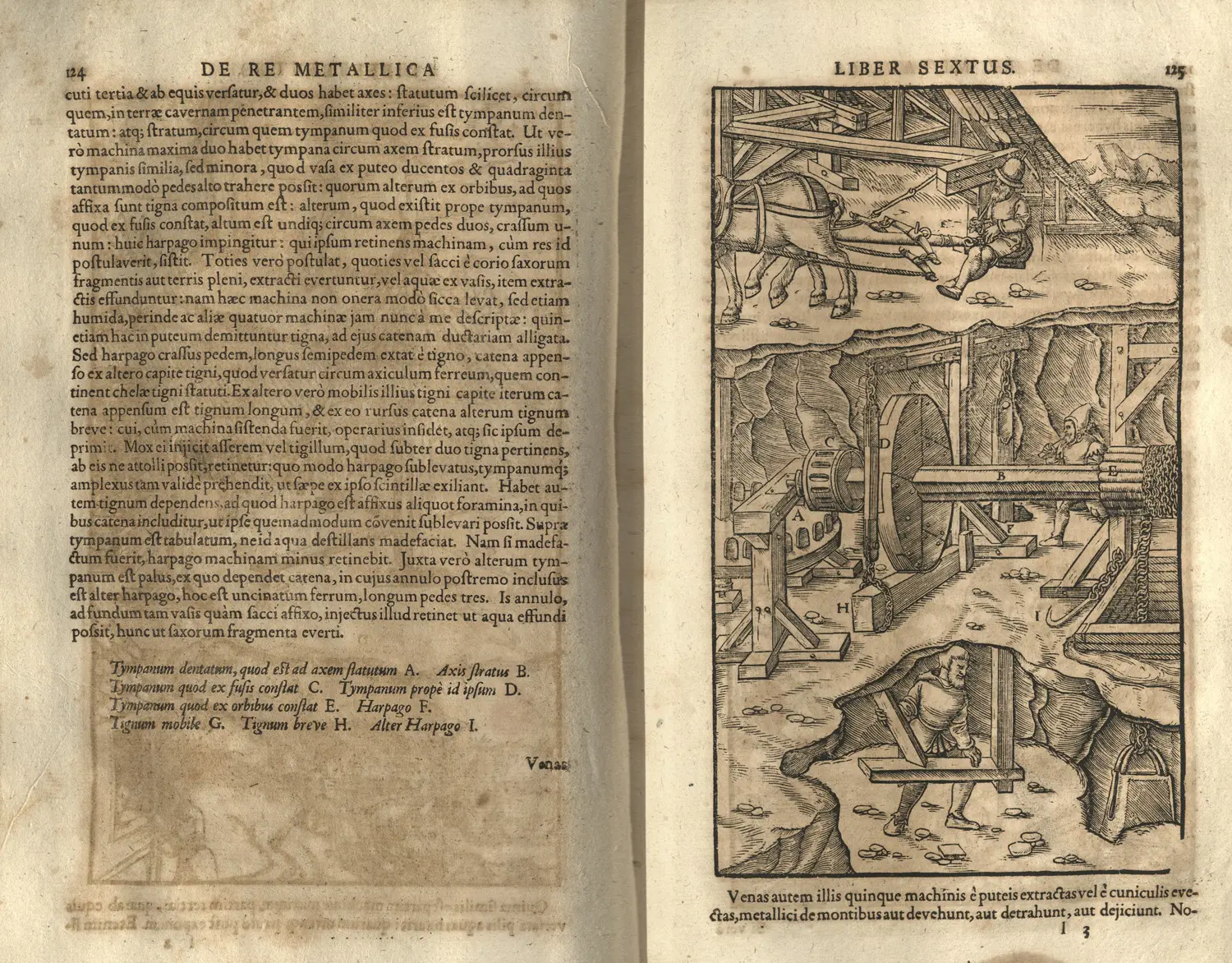
In his text, Agricola does not merely describe how a capstan works. Such a hoisting mechanism made it relatively easy to lift heavy loads, so it was a standard piece of equipment in every type of mine. Its operation is explained with an illustration; and the way the image is designed is so familiar to us today that we no longer even realize how revolutionary it was in the 16th century!
It is simply not a given that an illustration depicts only a detail, requiring the viewer to mentally fill in what lies outside the frame. No medieval artist would have created a horse without a head! But the horse’s head plays no role in how the capstan functions. Nor is it self-evident to create a cross-section with multiple levels: above ground, below ground, and deep underground. And then letters are used to establish a connection to the text: this, too, is a method so practical that we still use it today—through the letters, every reader can immediately find a depiction of the machine part whose technical name they do not know.
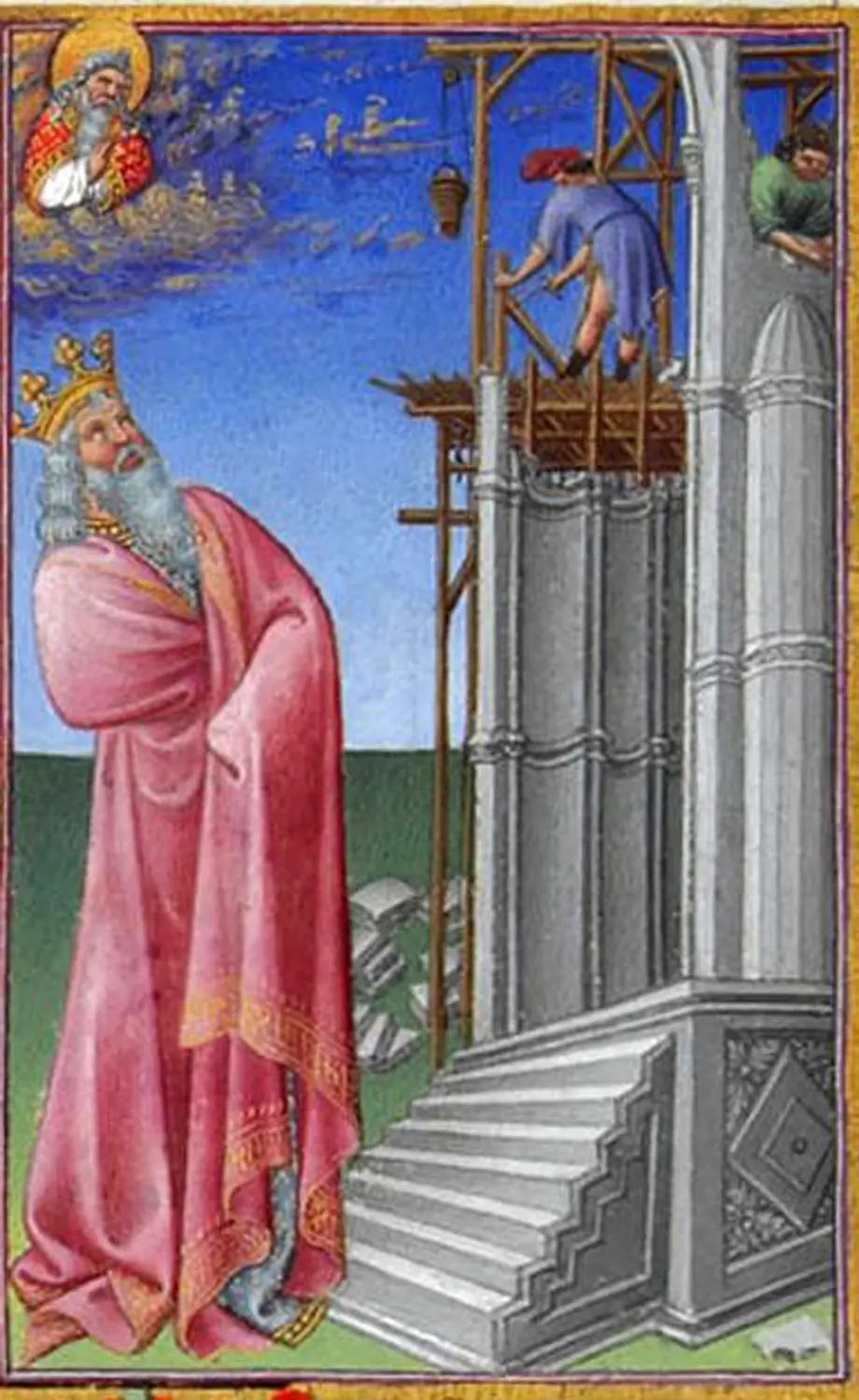
To truly appreciate the quality of the illustrations, one must compare them with earlier images. Our example shows a detail from what is arguably the most intricately detailed book of hours ever created. The illustrations in the “Très Riches Heures” of the Duke of Berry, created between 1410 and 1416, reveal a great deal to the viewer about everyday life in the late Middle Ages. However, anyone seeking to understand how a construction crane is built will find this illustration of little help.
Who were the artists who created these striking illustrations for *De re metallica*? This question has not been definitively answered, although we know a little more thanks to a letter that Agricola wrote to his printer, Nikolaus Bischof, on April 20, 1552. The author appears to have made the sketches for his 292 woodcuts himself. However, these sketches were not suitable as templates for sophisticated book illustrations. Therefore, Agricola commissioned Basilius Weffringer, who lived in St. Joachimsthal, to create the illustrations for Books VI through XII based on them. These were then transformed into woodcuts by Hans Rudolf Manuel, known as Deutsch (1525–1571), and Zacharias Specklin (1530–1576).
These printing blocks remained with the publisher, who used them to illustrate eight different editions between 1556 and 1657, including the one held by the Money Museum.
Today, there are historians who attribute a significant role in scientific progress to the revolutionary art of the Renaissance. In other words: Without an understanding of perspective and the courage to break new ground in artistic representation, the discoveries of Georg Agricola would never have reached such a wide audience or had such an impact.
The Book’s Legacy
Agricola’s work was not only pivotal for his contemporaries and the development of mining technology; it also played a crucial role in research into the history of mining technology. The foundation for this was laid by someone from whom one would least have expected it: the future U.S. President Herbert Hoover (1874–1964; President 1929–1933).
Hoover was a trained mining engineer who had specialized in the financially lucrative restructuring of struggling mining companies. In his spare time, he studied the history of mining, and that is how he discovered Agricola. Together with his wife, Lou Henry Hoover—a geologist and Latin scholar—he translated the work into English and published it, along with a detailed commentary, in 1912.
Enthusiasm for the technological history of the coal and steel industry has not waned since then. New translations of *Agricola* have been published time and again, including into Czech (1933), Russian (1962), Japanese (1968), and Hungarian (1985). In 2006–2007, the EU supported the “Agricola Project,” which aims to help students from different countries learn about Europe’s scientific and technological past. It’s hard to imagine a better patron for a European Union project.
You might also be interested in:
Much has been published about Agricola. While working on this article, we found a brief summary by Hans Prescher on the dissemination and reception of Georgius Agricola’s work to be particularly useful. Of course, there is also a biography of Agricola, written by Friedrich Naumann.



_01_ies.webp)